
October 11, 2026
Travelling With Multiple Dogs: Planning a Road Trip That Works for Everyone
Travelling with two, three or more dogs? This Canadian guide covers accommodation limits, safe transport, meals, different activity levels and road-trip itineraries everyone can enjoy.
Last reviewed: October 11, 2026
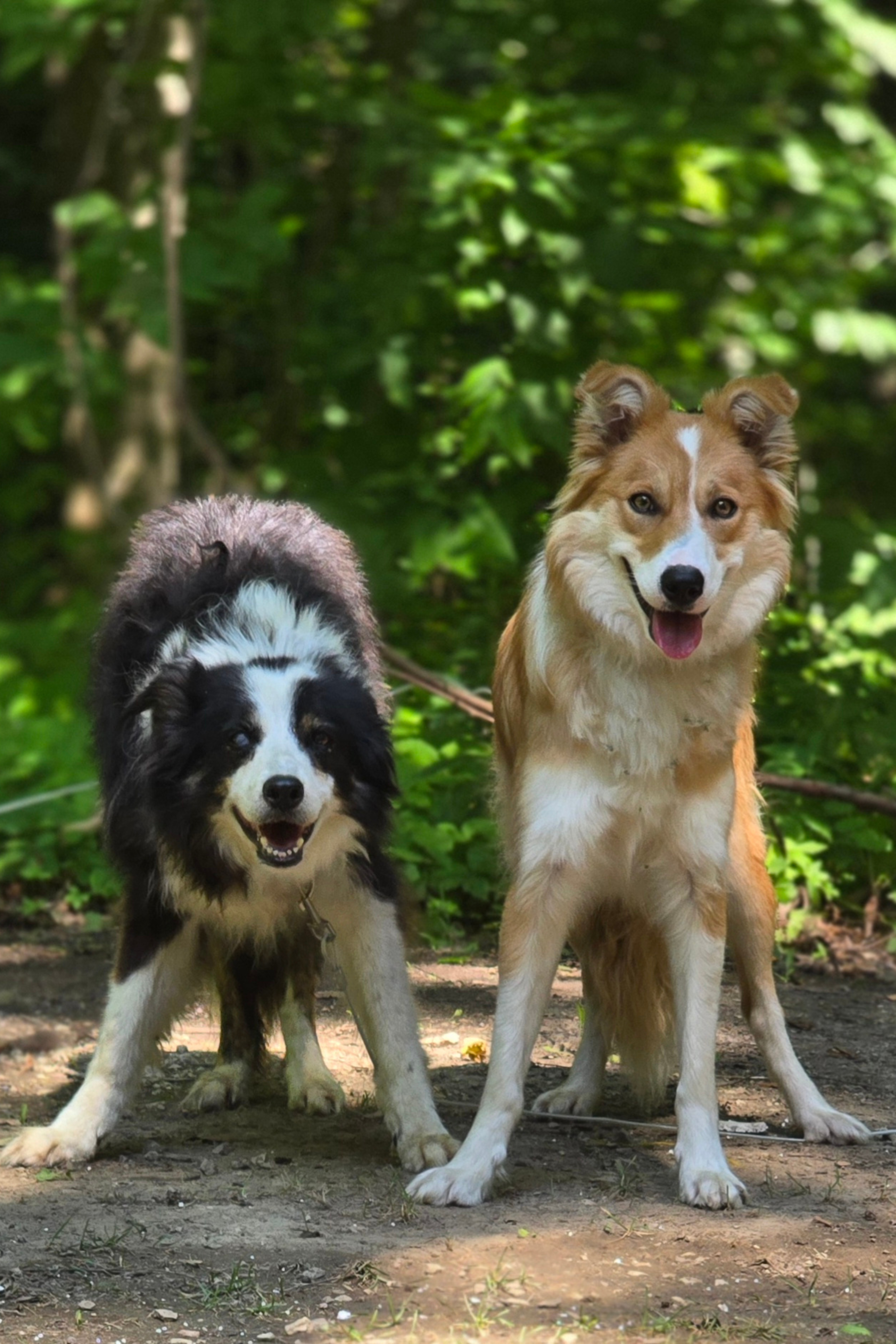
Travelling with multiple dogs takes a little more planning—but it does not mean giving up the adventures you love. The challenge is that two dogs sharing a home are not necessarily looking for the same holiday. One might be ready for a full morning hike while the other wants an easy stroll. One settles beautifully at a quiet cottage; the other has never slept anywhere but home. Add vehicle space, different feeding routines and an accommodation that says “pet-friendly” but allows only one dog, and a simple weekend getaway can become unexpectedly complicated.
The answer isn't to build an impossibly busy itinerary. It's to plan a trip that works for every dog travelling with you—and for the people responsible for them. This guide covers how to travel with two, three or more dogs in Canada, from booking your stay to organizing a safe road trip, choosing activities and creating an enjoyable return journey.
If you already have a destination in mind, start with the free Pawtastic Vacation Planner. Build the trip around your travel dates, route, preferred activities and the individual needs of the dogs coming along.
Start with each dog, not just the destination
Before you choose a hotel or put attractions on a map, make a short travel profile for each dog. The goal is not to label one dog “easy” and another “difficult.” It is to understand what will make the trip comfortable.
- Age and stamina: Can this dog comfortably manage a long walk, a short sightseeing stroll or mainly gentle outings? Puppies and seniors may need a very different daily rhythm from active adults.
- Vehicle comfort: Does the dog settle in a secure crate or restraint? Is there a history of motion sickness, fear or restlessness?
- Social preferences: Does the dog enjoy crowds, dogs passing nearby or busy patio environments—or need quieter spaces and more distance?
- Health and mobility: Are there medication times, food restrictions, stairs to avoid, temperature sensitivities or other needs to discuss with your veterinarian?
- Routine: What time does the dog normally eat, rest and go out? Which routines help the dog settle in unfamiliar surroundings?
- Group dynamics: Do the dogs relax together around toys, food, doorways and shared spaces? Would any dog benefit from a separate sleeping or feeding area?
Then identify the least flexible need in your group. If one dog can't manage a steep trail, that matters more than whether your other dog could hike it twice. If one dog is overwhelmed by crowded patios, don't design every meal around a busy patio. A vacation should accommodate the dog who needs extra consideration without denying every dog a chance to enjoy themselves.
It's perfectly fine if your dogs don't all love the same things. Our article Your Dog Does Not Need to Be a Social Butterfly explains why a quieter dog isn't missing out simply because they don't want every social experience.
Choose a destination with room for different experiences
Some destinations naturally make multi-dog travel easier. A cottage near several short trails may give one dog a gentle morning and another a longer adventure. A town with quieter green spaces, outdoor dining options and accessible walks offers more flexibility than a destination built around one highly demanding activity.
When researching places, ask:
- Are there several dog-friendly activities, rather than one “must-do” attraction?
- Is there a quiet walking option near where we're staying?
- Can the dogs rest comfortably between outings?
- Are there places suitable for a senior, young puppy or dog who needs extra space?
- Will at least one adult be available to manage each dog safely when the group needs to split up?
Planning tip: Put one shared activity at the centre of each day. Treat extra hikes, shops and patios as optional rather than trying to fit everything into the schedule.
Finding accommodation that actually allows two or more dogs
This is one of the most important steps in planning a multi-dog vacation. A “dogs welcome” filter does not tell you how many dogs are allowed, whether there are weight limits or how pet charges are calculated. Two friendly dogs can still exceed a property's policy.
Before making a non-refundable booking, contact the hotel, cottage owner, campground or rental host and confirm the details for your exact group:
- Number: How many dogs are permitted in one room, unit, campsite or rental?
- Size and other restrictions: Are there weight, breed, age or other pet-policy limits?
- Charges: Is the fee per dog, per night or per stay? Is there a refundable deposit or separate cleaning charge?
- Layout: Is there enough room for each dog to sleep and eat comfortably? Are there stairs, elevators, narrow corridors or busy shared entrances?
- Outdoor access: Is there a practical relief area? If the listing mentions a yard, is it genuinely secure and available for guest use?
- Unattended pets: Are there restrictions on leaving dogs in the accommodation, including in crates? Do not assume permission.
Ask for the agreed pet arrangements in writing. The point isn't distrust; it's avoiding misunderstandings after a long travel day with several tired dogs.
Also think about the layout rather than just the property's description. For dogs that need individual space, two distinct sleeping areas may be more valuable than a designer kitchen. For a dog with mobility limitations, a ground-floor entrance might matter more than a scenic upstairs bedroom.
Set up the vehicle for individual safety and comfort
A comfortable multi-dog journey begins before the engine starts. The Canadian Veterinary Medical Association's transport guidance specifically recognizes that travelling with multiple animals, older animals or animals with particular needs requires increased planning and monitoring.
Each dog needs an appropriate, secure way to travel, adequate space and ventilation, and a setup that doesn't distract the driver. Depending on your vehicle and the animals involved, that may mean separate secured crates or individually fitted vehicle restraints suitable for the dog and the vehicle. Don't assume an ordinary walking harness is crash-tested, or that a loose group of dogs on a back seat is safe.
Before loading your luggage, check these five things:
- Fit: Can every dog rest in a natural position without crowding another dog's space?
- Restraint: Is each crate or restraint appropriate, correctly installed and securely anchored according to its instructions?
- Airflow: Does every dog's area receive comfortable ventilation without exposing the dog to unsafe heat or cold?
- Access: Can you safely reach each dog for a planned stop or an emergency without unloading the entire car?
- Luggage: Are bags and other equipment secured so they cannot shift into the dogs' space?
Don't leave dogs unattended in a parked vehicle. A plan that relies on “just a quick stop” while the dogs wait inside is a poor fit for a summer road trip—and a risky one at any time if conditions become unsafe. The Government of Canada's travelling-with-animals guidance provides additional safety considerations.
Plan road-trip stops that work with several dogs
When several dogs travel together, the quickest fuel stop on Google Maps may not be the best place for a break. Look for somewhere with safe parking, a manageable leash-walking area and enough space to unload without dogs immediately encountering heavy traffic or crowds.
A workable rest-stop routine could look like this:
- Before opening a door: make sure leashes or other control equipment are securely attached, and decide which dog exits first.
- If one person is travelling alone: assess whether you can safely handle all dogs at once. If not, organize controlled, individual breaks while ensuring no dog is left in an unsafe environment. A second capable handler or a different travel plan may be necessary.
- Offer water and an appropriate relief break: not all dogs need the same amount of activity every time you stop.
- Use predictable handling: keep excited greetings and leash tangles from turning a simple stop into a stressful situation.
- Check everyone before departure: each dog is secure, comfortable and accounted for before the vehicle moves.
There's no single perfect interval for every dog. A young puppy, dog recovering from illness or older dog may need more frequent breaks than a healthy adult. Let their needs—and actual road and weather conditions—guide the schedule rather than treating a suggested time interval as a rule.
Build one vacation with more than one pace
One of the biggest mistakes in travelling with multiple dogs is treating every outing as an all-or-nothing group activity. The dogs can share a vacation without doing every minute of it together.
Imagine a four-day Ontario getaway with an energetic adult dog and a senior who enjoys gentle walks:
- Day 1 — Outbound drive: travel with comfortable breaks, choose an easy waterfront or neighbourhood stroll on arrival, then settle into the accommodation without another major outing.
- Day 2 — Adventure day: enjoy a short shared morning walk. If two capable adults are travelling, one can take the active dog on a longer permitted trail while the other gives the senior a quieter outing and rest. Meet up later for a relaxed, dog-friendly stop if both dogs are comfortable.
- Day 3 — Slow exploration: visit an easy-access scenic area together, leaving time for snacks, water and an unhurried afternoon. Skip the crowded stop if it doesn't suit one of the dogs.
- Day 4 — Return drive: take a different, sensible route where possible and look for a new easy walking stop rather than simply repeating every outbound stop. Keep extra food and rest time available in case traffic delays your arrival.
If you're the only human traveller, separate activities may not be practical. In that case, let the shared itinerary suit the dog who needs the gentler schedule. Don't leave one dog alone in a hotel, campsite or vehicle in order to take another dog on an adventure.
Looking for inspiration? Our Toronto-to-Muskoka dog-friendly road-trip guide offers a starting point for Ontario adventures—but check every potential stop for the specific access rules, conditions and suitability of your dogs before travelling.
Plan the outbound and return journeys from the beginning
A round trip is more than the same drive in reverse. Plan your departure and return dates together, including overnight needs, traffic considerations and dog-friendly stops in both directions. A relaxed lake walk on the way out might become a short wooded trail or different small-town stop on the way home.
When building your trip in the Pawtastic Vacation Planner, include your starting point, destination, travel dates, must-have stops and any dog-specific limitations that should shape the experience. Review individual driving days and stop order carefully; long journeys may need to be broken into separate navigable sections rather than treated as one enormous directions link.
Google Maps can help you navigate each route section, but a suggested itinerary is not a promise of live road conditions, current operating hours or guaranteed pet access. Confirm the actual drive and destination details before leaving. Our complete Canadian dog-friendly road-trip guide covers route pacing, overnight stays and travel logistics in greater detail.
Feeding several dogs away from home
Travelling doesn't erase the routines that keep a household of dogs comfortable. In an unfamiliar space, even dogs that normally eat side by side may be better served by a calm, separate feeding setup. Pack the usual food for each dog and clearly label individual containers or pre-portioned meals.
- Bring each dog's familiar food, normal supplements if used, and enough for the outbound trip, stay and return plus a buffer for delays.
- Pack dedicated food bowls and an easy way to clean them.
- Use separate feeding spaces if any dog eats quickly, guards resources or needs a special diet.
- Keep food, chews and high-value items managed carefully in smaller hotel or cottage spaces.
- If any dog eats raw or other perishable fresh food, verify dependable cold storage at every overnight destination and use safe food-handling practices.
For a practical supplies list, see our complete dog vacation packing checklist. It covers vehicle supplies, food, records, weather gear, camping essentials and the items you will want within reach during the drive.
Choose dog-friendly parks and trails carefully
“Dog-friendly” does not mean “off-leash,” and it certainly doesn't guarantee that a trail suits every member of a multi-dog group. Rules vary by park and jurisdiction. For example, Parks Canada's rules require dogs to be leashed at three metres or less and under control in protected places, with some areas closed to dogs. Ontario Parks generally requires leashes no longer than two metres outside designated exceptions.
With several dogs, look beyond the rule itself. Is the trail wide enough to manage passing people and dogs safely? Is there shade and water? Can a senior dog handle the surface? Is the trail likely to be crowded? If the answer is no, an easier route can be the better adventure for everybody.
Don't feel pressured to turn a vacation into a dog-park tour. Group play isn't appropriate for every dog, especially in unfamiliar, high-arousal environments. Our guide to dog parks, their benefits and their risks can help you decide whether an off-leash stop actually fits your group.
What changes when you travel with three, four or more dogs?
The number of dogs changes the logistics even if every dog is exceptionally well behaved. Rather than assuming one plan scales up automatically, reassess:
- Vehicle capacity: is there sufficient, appropriate secured space for every dog and all essential luggage?
- Human capacity: who manages each dog at rest areas, doorways and check-in? Can they do so safely, especially if one dog becomes upset?
- Accommodation rules: is the exact number of dogs permitted, and are the total fees clear?
- Rest and feeding: does each dog have an actual place to settle, eat and sleep?
- Backup options: if one dog feels unwell, can your group change the day without leaving other dogs unattended or compromising their welfare?
A second capable adult can make travel much easier, especially when dogs have different needs. But the important factor is not simply the number of people—it's whether the entire group can be managed safely and comfortably throughout the journey.
A simple multi-dog vacation planning checklist
- ☐ Write down each dog's activity level, comfort limits, feeding needs and medication schedule.
- ☐ Choose shared activities suitable for the dog who needs the gentlest pace.
- ☐ Confirm the accommodation allows the exact number and size of dogs.
- ☐ Obtain the full pet-fee and deposit details before booking.
- ☐ Arrange separate, secure travel spaces and a safe loading plan.
- ☐ Identify suitable water and relief stops for every travel day.
- ☐ Pack labelled food, medication, identification and supplies for each dog.
- ☐ Check park, beach, patio and trail rules rather than relying on a generic dog-friendly label.
- ☐ Plan quiet time and separate feeding or resting areas where needed.
- ☐ Organize the return journey, with different stops where practical.
- ☐ Save veterinary contacts, current records and a backup plan if the trip changes.
Frequently asked questions about travelling with multiple dogs
Can you stay in a hotel with two or three dogs?
Sometimes—but don't assume a pet-friendly hotel accepts every number of dogs. Each property sets its own rules and fees. Contact the specific location and confirm the number, size and requirements of your dogs before booking.
Should two dogs travel together in one crate?
Each dog needs adequate space and an appropriate secure transport arrangement. Separate, correctly secured travel spaces are generally the more manageable choice because they allow individual positioning and avoid crowding. Talk with your veterinarian and review the restraint or crate manufacturer's instructions for your particular dogs and vehicle.
How do you handle rest stops with multiple dogs?
Choose a safe location, attach control equipment before opening vehicle doors, use a predictable unloading order and provide individual water and relief opportunities. If one handler cannot safely manage all the dogs, adjust the plan rather than attempting to rush everyone out at once.
What if one dog is reactive or doesn't enjoy other dogs?
Build the itinerary around quiet places, predictable handling and appropriate distance. A dog does not need to socialize with strangers or join off-leash play to enjoy a holiday. Consider a qualified trainer or veterinarian if you need a tailored management plan for travel.
How do I plan a round trip with multiple dogs?
Decide on both travel dates before booking, check realistic daily drive lengths and plan rest, feeding and overnight arrangements for the outbound and return legs. Include different safe, dog-friendly stops on the way home when practical. Review the route in your navigation app rather than relying on a single directions link for a multi-day journey.
Make the trip fit the dogs you actually have
The best multi-dog vacation is not the one with the most stops or the fullest schedule. It's the one where each dog has opportunities to enjoy the experience, the people can manage everyone comfortably and no one is exhausted before the first full day begins.
Ready to plan your next adventure together? Open the free Pawtastic Vacation Planner and start building a dog-friendly trip for your whole crew →

Turn this inspiration into a Pawtastic vacation.
Build a free, personalized Canadian trip itinerary for your dogs, with adventures, stays and travel stops. Start online as a guest—no app or account required.


Keep exploring
Everything you need — from finding your next dog to caring for the one already at your feet.
Comments (0)
Loading comments…