
January 28, 2025 · Angelique
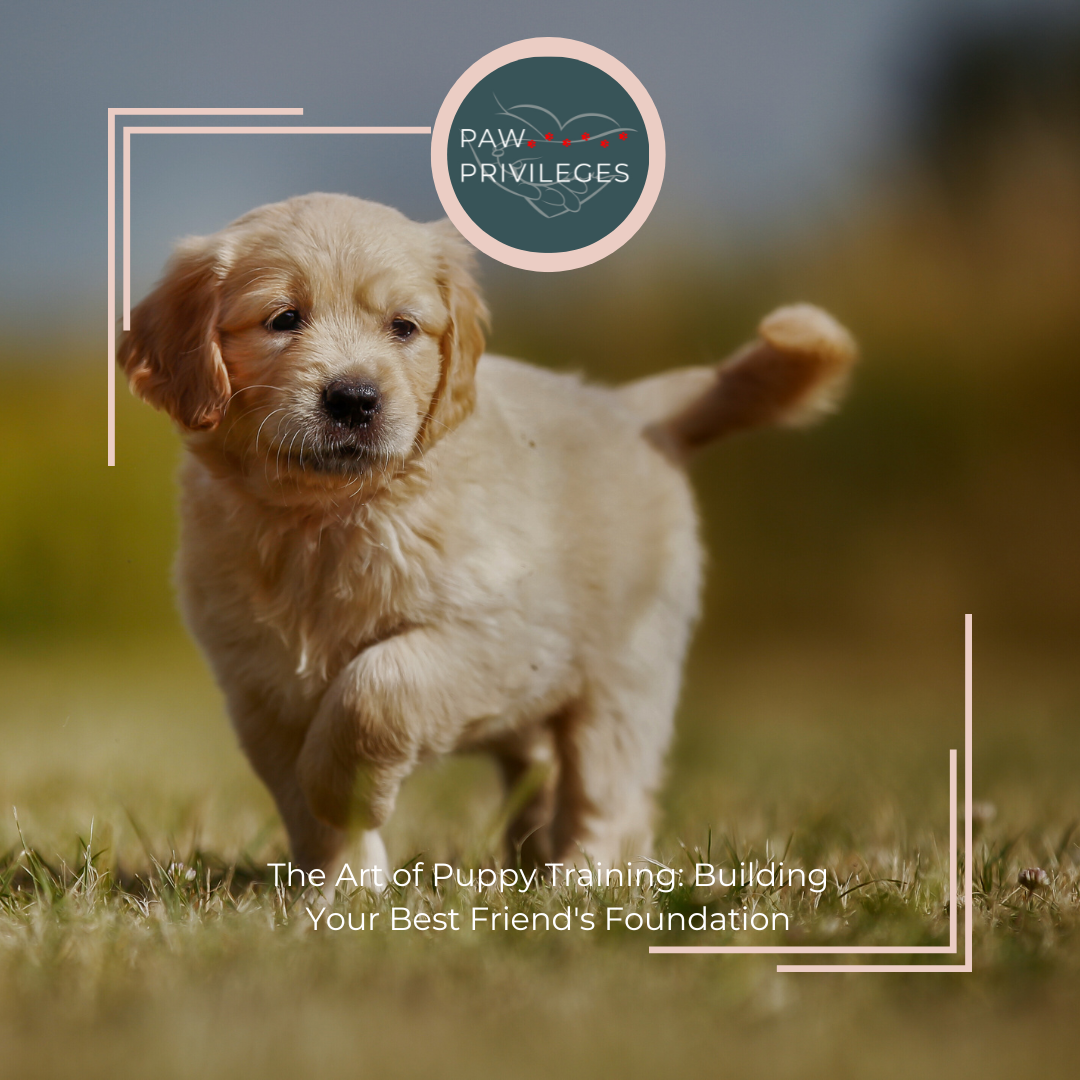
The Art of Puppy Training: Building Your Best Friend’s Foundation
Help your puppy build confidence with reward-based training, everyday routines, positive socialization and patient, consistent practice.

Your new puppy is home, and between those adorable puppy eyes and tiny paws, you might be wondering how this little bundle of energy will ever learn to become a well-behaved adult dog. Don’t worry – you’re not alone, and with the right approach, training can be one of the most rewarding experiences you’ll share with your new family member.
Understanding Your Puppy’s Mind
Your puppy is learning from everyday experiences: what feels safe, what earns a reward and how life in your home works. Early experiences matter, but your puppy is not a computer to program, and learning does not stop at a particular age. Keep practice gentle, predictable and suited to the puppy in front of you.
During these early months, your puppy is naturally primed to learn about their world. They’re like tiny scientists, conducting experiments with everything they encounter: “What happens if I chew this?” “What if I jump on that?” “How does my human react when I do this?” Your job is to guide these experiments toward positive outcomes.
The Power of Positive Training
Gone are the days of dominance-based training and harsh corrections. Reward-based teaching can help puppies learn new skills while maintaining trust. When you reward behaviours you like, you’re not just training your puppy; you’re building a relationship based on trust and understanding.
Think about it this way: if someone only told you what you were doing wrong, never acknowledging your successes, how motivated would you be to learn? Your puppy feels the same way. When training focuses on rewards and success, your puppy becomes an eager participant in the learning process.
Starting with the Basics
Before diving into fancy tricks or advanced commands, focus on these fundamental skills that form the backbone of good behaviour:
Name Recognition: This is your first building block. Your puppy needs to learn that their name means “pay attention to me.” Make it fun – say their name and reward them with treats and praise when they look at you.
Coming When Called: Perhaps the most important command you’ll ever teach. Start in a quiet room, call your puppy’s name followed by “come,” and reward generously when they reach you. Gradually increase distance and distractions as they improve.
House Training: This requires patience and consistency more than anything else. Establish a routine, reward successful outdoor business generously, and remember that accidents are learning opportunities, not failures.
The Secret to Success: Consistency and Timing
Here’s what many new puppy parents don’t realize: it’s not about having the perfect training technique – it’s about being consistent with whatever technique you choose. Your puppy learns through patterns and repetition. If jumping up sometimes gets attention (even negative) and sometimes doesn’t, you’re sending mixed messages.
Timing is equally crucial. That treat or praise needs to come within seconds of the desired behaviour. This is where many people struggle – they fumble for treats or wait too long to reward. Keep treats easily accessible (a treat pouch works wonders) and be ready to mark good behaviour instantly.
Beyond Basic Training: Building a Well-Rounded Puppy
While sit, stay, and come are important, true puppy education goes beyond basic commands. Socialization – exposing your puppy to new experiences in a positive way – is arguably even more important than formal training.
Take your puppy on adventures, but make them positive experiences. Choose controlled, positive exposure to people, surfaces, sounds and suitable dogs. Follow your veterinarian’s guidance on vaccination-related disease risks and avoid forced greetings. The key is to pair these experiences with good things – treats, praise, and play.
When Things Get Tough
Every puppy parent has moments of frustration. Maybe your puppy seems to have forgotten everything they learned yesterday, or perhaps they’ve discovered the joy of chewing furniture. Remember this: regression is normal, and consistency is key.
If you’re struggling with a particular behaviour, take a step back and ask yourself:
- Am I being consistent with my responses?
- Are my expectations age-appropriate?
- Is my puppy getting enough exercise and mental stimulation?
- Am I setting them up for success?
Sometimes, the answer is simply that your puppy needs more time and practice. Other times, you might need to adjust your approach or seek professional guidance.
Looking Ahead
Training doesn’t end after puppyhood – it’s a lifelong journey. The good news? The strong foundation you build now will make future learning easier. Focus on making training a positive experience, celebrate small victories, and remember that every puppy learns at their own pace.
Most importantly, enjoy this time with your puppy. Yes, there will be challenges, but there will also be countless moments of joy, breakthrough, and connection. These early months are setting the stage for years of companionship to come.
Remember, at Paw Privileges, we’re here to support you on this journey. Whether you need advice, encouragement, or just want to share your successes, our community of puppy parents understands exactly what you’re going through.
Keep Reading: Puppy Training Essentials
- Puppy Academy
- New Puppy Checklist
- Effective House Training Techniques
- Understanding Puppy Behavior
- Safe Socialization Before Vaccinations
- The Complete Guide to Puppy Nutrition
- FeedWise Food Calculator
A practical first-week puppy training plan
Start with what helps your puppy understand daily life: responding to their name, coming a short distance when invited, settling after play, and going outside for toilet breaks. Keep early sessions short and positive. Practise when your puppy is rested and receptive rather than asking for a long list of behaviours at once.
Days 1–2: attention, reward timing and routine
- Name game: say your puppy’s name once in a quiet room. When they turn toward you, mark the moment with a cheerful “yes” and reward. If there is no response, reduce distractions rather than repeating the name.
- Follow-me game: take a few steps away, invite the puppy along and reward when they catch up. Keep the distance small.
- Toilet routine: offer a calm outdoor opportunity after sleep, meals and play. Praise and reward the desired location; clean indoor accidents without punishment.
- Rest: alternate short play and training with undisturbed sleep. A tired puppy may need a break, not a harder lesson.
Days 3–4: recall, handling and a place to settle
Practise a cheerful recall in an enclosed, low-distraction space with one family member at a time. Reward arrival generously and avoid calling the puppy for something they find unpleasant. Pair brief touches of paws, ears, collar and grooming tools with rewards, stopping before the puppy becomes uncomfortable. Build positive associations with a bed, crate or resting area without forcing confinement.
Days 5–7: loose-leash beginnings and gentle distractions
Introduce a comfortable, properly fitted harness or collar, then reward the puppy for moving near you for just a few steps. Practise around ordinary household sounds and sights at a distance where the puppy remains relaxed. The objective is confidence, not completing a checklist of strangers or dogs. For the first two days of settling into a new home, see First 48 Hours With a New Puppy.
Five essential foundation skills: how to teach and troubleshoot
- Name recognition: say the name once, mark eye contact and reward. If your puppy ignores you, move somewhere quieter.
- Recall: crouch or step backward and invite your puppy in; reward arriving. Build distance before distraction, never both at once.
- Loose-leash walking: reinforce a few steps near you, pause if the leash becomes tight and restart when the puppy can reconnect.
- Settle: reward voluntarily lying on a mat in a calm setting. Increase duration gradually rather than requiring a long stay immediately.
- Cooperative care: briefly introduce touch or a grooming tool, reward calm participation and pause when the puppy wants distance.
For focused training between classes, try 10 Five-Minute Training Activities. For toilet-training details, see Effective House Training Techniques.
Socialization is about positive experiences, not forced greetings
Help your puppy observe people, traffic, surfaces, household sounds and appropriately managed dogs without being overwhelmed. Watch for signs that the puppy needs more distance or a break: freezing, retreating, refusing rewards or frantic attempts to escape. Ask your veterinary team about an appropriate exposure plan for your puppy’s vaccination status and local disease risks. Avoid dog parks and uncontrolled dog interactions as a substitute for carefully planned introductions. Learn more in our puppy socialization guide and guide to choosing a puppy class.
How Paw Rewards can support your training routine
The Paw Rewards app is 100% free, with no premium tier. Its training pathway starts with eight-week puppy foundations and extends to advanced K9 Working and elite levels, with activities personalized to your dog's breed, age, activity and lifestyle. Choose suitable tasks, record what your dog actually achieved and use the results to guide your next practice. The app can help structure repetition, but it cannot replace qualified in-person teaching or professional assessment of concerning behaviour.
Account requirement: you must have an active, free Paw Rewards app account to earn or redeem eligible Treats. Training alone does not guarantee a bonus; special Paw Quests have their own dates and participation rules. See how dog training and rewards work and the current Paw Quests before expecting a campaign reward.
When to ask for additional help
Ask a qualified local trainer for guidance when a behaviour is escalating, you cannot make progress without frightening the puppy, or the training environment is difficult to manage. Contact your veterinarian promptly if your puppy shows pain, sudden behavioural changes or persistent distress. A useful puppy class should support appropriate handling, managed interactions and coaching for people as well as dogs.
Puppy training foundations: common questions
How long should an eight-week-old puppy train?
Think in brief moments rather than long lessons. One or two successful repetitions during an everyday routine can be useful. Stop when attention fades and allow plenty of rest.
Should everyone in the family use the same cues?
Yes. Agree on a short list of cues and rewards so the puppy can predict what earns reinforcement. Keep expectations age-appropriate and be consistent without being rigid.
What should I do when a puppy makes a mistake?
Change the setup to make the desired behaviour easier, reward the next correct attempt and prevent repeated rehearsal of the unwanted behaviour. Avoid punishment for toilet accidents, fear or confusion.
Can the app replace a puppy trainer?
No. Paw Rewards can personalize and organize practice, while a qualified instructor can observe your dog and handling in real time.
Your puppy journey
Keep building a calm, confident start.
Paw Rewards is free; an active Paw Rewards app account is required to earn and redeem Treats. No breeder invitation is required.
Comments (0)
Loading comments…