September 22, 2026 · Angelique
Watching Your Dog Grow Old: The Changes That Are Hard to Admit
The pause at the stairs, broken sleep, accidents and frightening changes deserve more than “just old age.” An honest guide to noticing, adapting and caring for the senior dog beside you.
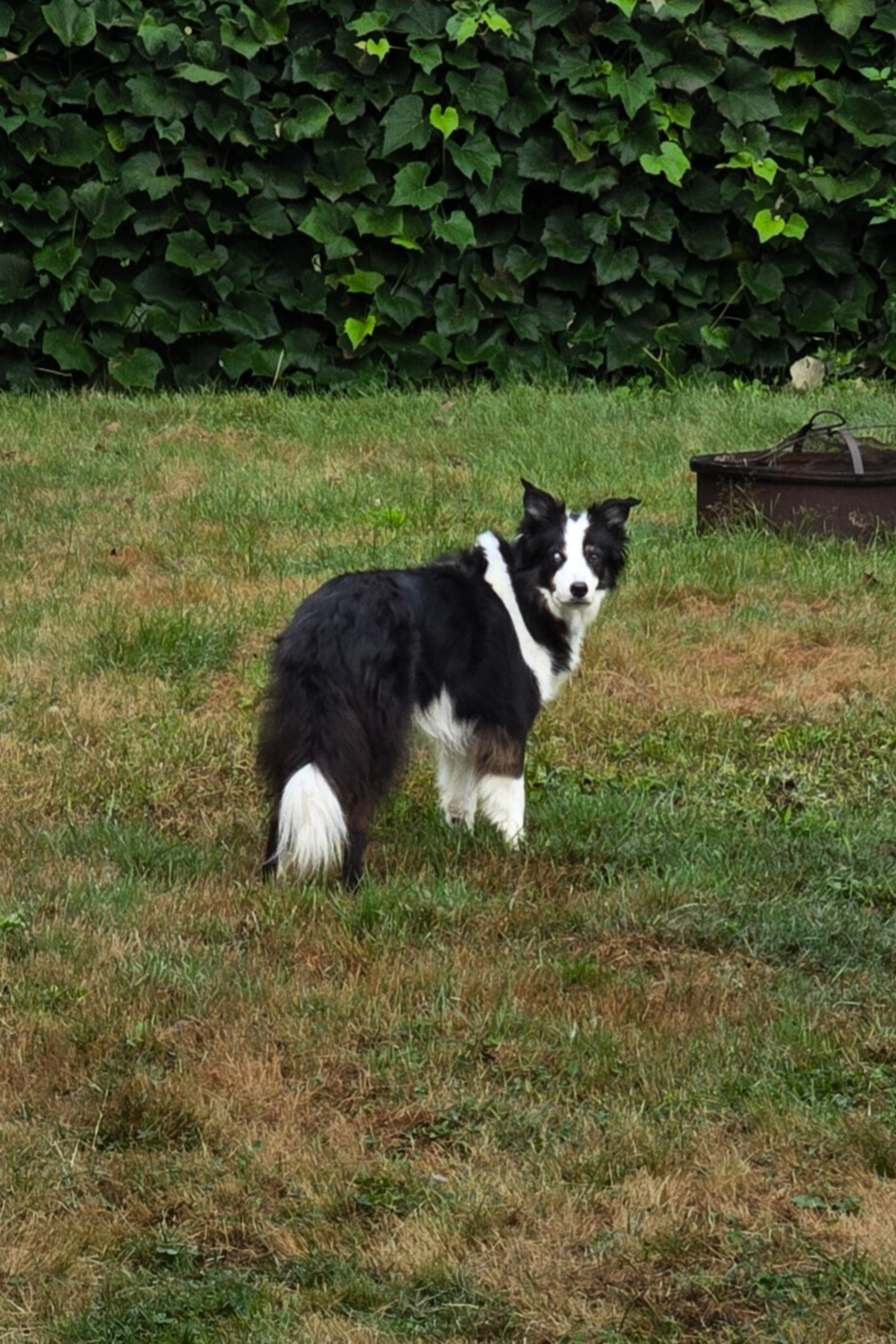
Sometimes it is the pause before the stairs.
The dog who used to be at the door before you reached for your shoes waits for you to come back. They still want the walk, but they take longer to get going. You notice a little more white around their face, then realise the change that worries you is happening somewhere else.
Watching your dog grow old can be painful in ways that are difficult to explain. You are grateful they are here. You want more time. And you may find yourself explaining away something you would have investigated immediately in a younger dog.
We owe our older dogs more than “they’re just getting old.”
Age changes the conversation. It does not tell us why a dog is struggling, whether that struggle can be helped, or what they still enjoy. Those questions deserve attention.
This is where I want us to be honest: senior life can include wonderful, ordinary days together. It can also include wet bedding, broken sleep, frightening symptoms and decisions you desperately wish someone else could make. Owners need useful information for all of it.
First, know when to stop reading and call
Difficulty breathing, collapse, a prolonged seizure or repeated seizures, and a swollen abdomen with repeated unsuccessful attempts to vomit require emergency veterinary attention. Sudden vision loss also needs urgent assessment. Call the nearest available veterinary emergency service and follow its instructions; do not wait for your usual clinic to open. These are among the emergencies described by VCA Canada’s veterinary guidance.
A dog who suddenly cannot stand, falls repeatedly or develops a head tilt also needs an immediate veterinary call. You cannot establish the cause from their age or an online video.
For less dramatic changes, contact your veterinary team and describe what has changed so they can advise on timing. “Gradual” does not mean “unimportant.”
There is no birthday that explains everything
Dogs do not all enter their senior years at the same age. Size, breed, expected lifespan and individual health matter. AAHA’s senior-care guidance makes that distinction and separates age from frailty, which involves reduced reserves and greater vulnerability.
That matters because two dogs of the same age may need very different arrangements. One may still enjoy substantial activity. Another may need help with basic movement. Neither should be measured against a birthday chart or someone else’s dog on social media.
Ask your veterinarian when senior monitoring makes sense for your dog. Keep looking at function: how they move, recover, rest, interact and manage their day.
You are allowed to use the word “senior” without deciding that everything enjoyable is over. You are also allowed to acknowledge that your dog needs more help without treating that as a failure.
The changes you quietly work around
It is surprisingly easy to adapt without noticing how much you have adapted.
You stop using the upstairs bedroom. You lift the dog into the car. You take the shorter route. You bring their bowl closer. Each decision seems small, and each may be sensible, but together they tell a story worth bringing to an appointment.
Consider this illustrative example: a dog still goes outside every morning, so the owner reports that the routine is unchanged. But the dog now takes several attempts to rise, avoids the tiled hallway and needs help over the doorstep. “Still goes outside” leaves out most of what has changed.
Describe the actual task. What did it look like a month ago? What happens now? What assistance have you started providing?
Short, dated videos of ordinary movement can help your veterinarian see what happens at home. AAHA recommends home videos as an aid to assessing pain and mobility. Film a naturally occurring moment safely. Do not repeatedly make your dog climb stairs or perform something difficult to demonstrate a problem.
If you cannot remember when a change began, say so. Start recording today. You do not need a perfect history to deserve help.
Slowing down deserves a closer look
A dog who hesitates, slips, becomes reluctant to walk or struggles to rise may be experiencing pain. Osteoarthritis can cause stiffness, reduced activity, difficulty with stairs and changes in behaviour, as Cornell’s osteoarthritis guidance explains. It is one possible cause, not an explanation for every change.
A wagging tail or enthusiasm for the lead does not rule out discomfort. Look at what happens during the activity and afterwards, including the next morning. Mention new coughing, unusual breathing, weakness or reduced stamina too.
“He still wants to” and “this is comfortable for him” are separate questions.
That can be especially hard with a dog who has always worked, trained or played intensely. Their willingness means a great deal to you. It still needs to be considered alongside their current physical abilities.
Ask what the examination suggests, what further assessment would help and what improvement you should expect from the proposed plan. Agree on when to reassess if things do not improve.
Do not start human pain medication or reuse another pet’s prescription. The appropriate treatment depends on your dog’s health and other medications.
Appetite, weight and toileting changes deserve their own conversation
“Eating something” is an imprecise description. Write down whether your dog finishes their usual meal, takes longer, drops food or only accepts particular foods. Record changes in drinking, urine, stools and body weight where you can.
AAHA’s guidance on illness in senior pets identifies altered appetite, thirst, weight, behaviour and movement as changes that may need investigation. An older dog can have more than one condition at once.
Do not assume weight loss is welcome because your dog used to be heavy. Muscle and body fat need to be assessed separately. AAHA’s senior nutrition guidance emphasises monitoring both. A “senior” label on food cannot replace an individual assessment.
Bring details of the full diet, including fresh or raw meals, treats, toppers and supplements. If a change is recommended, ask which problem it is intended to address and how you will assess whether it helps.
House-soiling needs the same curiosity. Note whether you find wet bedding after sleep, see urgent requests to go out, or notice that your dog cannot reach the exit easily. Those descriptions give your veterinarian something to investigate.
A dog who needs help getting outside has not suddenly become a bad dog. Clean up, preserve their dignity and work out what support they need.
When the nights become difficult
An older dog may start pacing after everyone has gone to bed, seem trapped behind furniture or stand at the wrong side of a familiar door. They may sleep much of the day and struggle to settle at night.
These changes can occur with canine cognitive dysfunction. Pain, other disease and sensory changes can also affect behaviour. AAHA’s cognitive-dysfunction guidance stresses investigating other explanations rather than diagnosing from one behaviour.
Record what the difficult period looks like. When does it begin? Does your dog need to toilet? Can they settle? Have medications or household routines changed? A brief video may show more than the word “restless.”
Tell the clinic how much sleep both of you are losing. Ask for a plan for the nights, including what warrants an urgent call. Do not simply add a sleep product without discussing it.
Frustration at three in the morning does not mean you love your dog less. It means the situation needs support. Your dog needs help with whatever is happening; you need a routine you can sustain.
The frightening realities: vestibular episodes, cataracts and cancer
These deserve proper discussion. They are not inevitable parts of every dog’s old age, and they do not all have the same outlook.
Vestibular episodes can change the day in minutes
A sudden head tilt, flicking eye movements, falling or rolling can be terrifying. Nausea may make eating and moving difficult.
Call your veterinarian immediately. Problems involving the ear, nerves or brain can produce vestibular signs. Some older dogs have idiopathic vestibular syndrome, where an underlying cause is not identified, but that conclusion requires assessment.
Davies Veterinary Specialists explains that recovery depends on the cause. Many idiopathic cases improve, although recovery varies and a head tilt can persist.
While arranging care, prevent access to stairs and other fall hazards. Ask how to transport your dog safely. After assessment, get specific instructions for nausea, hydration, meals and toileting.
The home-care questions matter: can one person safely help this dog outside? What happens if they cannot drink adequately? Whom do you call if the condition worsens? An encouraging outlook can still involve demanding nursing care.
Cloudy eyes need an examination
A blue-grey haze can reflect age-related nuclear sclerosis; cataracts are a different lens change that can impair vision. You cannot reliably decide which it is by comparing photographs.
Cornell’s cataract guidance also describes potentially painful complications and the value of timely assessment. Ask whether an ophthalmology referral is appropriate.
If surgery is an option, discuss the home commitment as well as the operation: eye drops, appointments, activity restrictions, transport and help administering treatment. If surgery is unsuitable or declined, ask what monitoring and treatment the eyes still need.
Reduced vision may call for predictable furniture placement, clear routes and barriers at hazards. Sudden sight loss or a painful-looking eye needs urgent veterinary attention.
You can help a dog adapt while still investigating what has changed.
Cancer starts a series of decisions
A persistent or growing lump, unexplained weight loss, non-healing sore or sustained appetite change needs assessment. Cornell lists these among potential cancer warning signs; they also have other possible causes.
If cancer is diagnosed, ask what type it is, what is known about its extent and what each option aims to achieve. Treatment may aim at cure, control or relief of symptoms, depending on the disease and the dog.
Ask what life is likely to look like during treatment. How often are visits? What care happens at home? What complications might require urgent help? What would comfort-focused care involve?
Cornell’s discussion of cancer decisions emphasises the individual dog, other health conditions and family circumstances. An oncology consultation can help clarify choices.
Ask for realistic uncertainty. Someone else’s story cannot tell you what will happen to your dog, and the most intensive option is not automatically the most suitable one.
Make the ordinary day easier
Think through the route your dog uses from waking up to settling for the night. Where are they hesitating? Where do you find yourself rushing over to help?
AAHA’s senior pain-management guidance includes appropriate bedding, better traction, ramps and fitted support harnesses among possible adaptations. Ask which suit your dog and have unfamiliar equipment demonstrated.
Start with one actual difficulty. If the problem is the slippery stretch between the bed and the back door, address that route. A wonderful new bed does not solve the floor between it and the exit.
Check that mats stay in place and edges do not create a trip hazard. A ramp needs suitable traction and a manageable slope; having one in the house does not mean your dog can use it safely.
For accidents, keep spare washable bedding ready and ask the clinic about skin care if your dog is getting wet or soiled. Do not reduce access to drinking water to make the laundry easier.
In a Canadian winter, include the doorway, steps and toilet area in the plan. An icy patch may affect both the dog and the person helping them.
Ask someone else to walk through the care routine with you. If the plan depends on a lift you cannot safely manage alone, it needs revising before the next difficult night.
Keep the parts of life that belong to your dog
A shorter walk can still include the things your dog went outside to enjoy.
Think about what made the old outing valuable. Was it running, investigating scent, spending time with you, or visiting somewhere familiar? Which parts can you preserve at an appropriate level?
For a dog with mobility limitations, discuss suitable activity with your veterinary team. Cornell’s arthritis guidance includes tailored activity and rehabilitation among management options. The right amount depends on the dog and their condition.
You might choose a level route with an easy return, a brief search game or time together in a comfortable outdoor spot. Consider the whole experience, including getting into the car and recovering at home.
Do not use the old distance as a test of loyalty to the dog they used to be. Equally, do not remove every enjoyable activity merely because they have become older.
Protect their social boundaries too. A senior should not have to absorb a young dog’s rough play to remain part of the family. Give them comfortable space and supervised, compatible company. Our article on respecting dogs who prefer their own people and adventures applies here as well.
The question is simple: what can we enjoy together today?
Keep a change-and-comfort journal you will actually use
A notebook or a note on your phone is enough. Use it to describe your dog’s day and prepare better conversations with the veterinary team. This is an observation tool, not a diagnostic test or a validated quality-of-life scale.
Record | Make it specific |
|---|---|
Date and main change | What happened, when it started and whether it is becoming more frequent. |
Movement and assistance | Which ordinary task was easy or difficult, the surface involved and help needed. |
Meals, drinking and toileting | What was eaten; changes from usual; accidents and their circumstances. |
Rest and overnight events | Whether your dog settled, when they woke and what happened next. |
Treatment given | Follow the prescribed schedule; record doses actually given, missed doses and suspected effects. |
Enjoyment and difficult periods | What your dog chose to do, what appeared comfortable and what was distressing. |
Next action | Question for the clinic, appointment booked or agreed follow-up date. |
For example: “Tuesday: needed help at the back step twice; ate usual breakfast; chose to sniff in the garden; paced from 2–3 a.m.; called clinic about the new night waking.” That is an illustrative entry, not a diagnosis.
Keep the difficult hours as well as the lovely photograph. Neither should erase the other. If something is urgent, make the call first; completing a journal is never a reason to delay care.
Make the veterinary appointment about daily life
Bring your observations and your three most important concerns. Include all medications and supplements, with names and amounts. AAHA’s senior-assessment guidance highlights the value of a thorough history, examination and review of everything the pet receives.
Ask your veterinarian:
Which changes might be connected, and which need separate investigation?
What would this test tell us, and how could the result change the plan?
What should improvement look like at home, and when should we expect it?
What should make me call sooner, including after hours?
What are our options if the proposed care is physically or financially difficult?
Ask when the next examination is due. Routine monitoring and appointments for new symptoms serve different purposes; a future checkup should not become a reason to sit on a concern.
You can be respectful and persistent: “I understand that she is older. I need help understanding why this has changed and what we can do for her.”
You can love your dog and be exhausted
The care happens on ordinary workdays. Bedding needs washing. Someone needs to collect a prescription. You may be calculating whether you can leave the house long enough to buy groceries.
AAHA recognises caregiver burden and the need for plans that account for the family’s practical and emotional limits.
Say what is difficult. “I cannot lift him safely.” “I am sleeping in short stretches.” “I need to understand which appointments are essential.” Those are useful facts.
Ask a trusted person to learn part of the routine before you desperately need relief. Written instructions help when several people share care, especially medication tasks.
You may also miss things while your dog is still here: a familiar walk, the way they used to race to the door, the ease of leaving home without worry. That sadness deserves room. If it is becoming hard to manage, ask about counselling or pet-loss support.
Your dog does not benefit from a care plan that quietly becomes impossible.
Talk about what comes next while there is time to think
Not every senior dog is approaching the end of life. When serious illness or declining function makes the question relevant, ask your veterinarian how to assess comfort and what changes would mean the plan is no longer meeting your dog’s needs.
AAHA discusses journals and quality-of-life tools, while noting that many online scales are not validated. Use them with professional guidance. A number cannot make the decision for you.
A good appetite or one happy greeting cannot cancel out severe distress. Record how the whole day is going, and seek help promptly when suffering is not controlled.
Ask about comfort-focused care, urgent reassessment and euthanasia when appropriate. Keep the after-hours contact and a transport plan somewhere everyone helping with the dog can find them.
Then make room for today. Sit together. Take an ordinary photograph. Let the outing happen at a pace that suits your dog.
They have spent years learning how to live with us. Now it is our turn to keep learning how to live well with them.
Return to Life With Your Dog for guidance across the stages you share.
Sources checked September 22, 2026. This article supports observation and conversations with your veterinary team; individual health decisions need your dog’s history and examination. Featured photo: Pets Through The Lens.
Start Your Next Adventure
Love discovering dog-friendly places like this?
Join Paw Rewards and use our Pawtastic Vacation Planner to plan your next trip, discover dog-friendly destinations across Canada, track your adventures, compete in challenges, and earn Treats for every walk and every memory you create together.
Redeem your Treats for rewards including Puppy Packs, PAWS Magazine subscriptions, Big Country Raw products, Seasonal Boxes, and exclusive offers from our amazing partners.
Because every adventure deserves a reward.
Keep exploring
Everything you need — from finding your next dog to caring for the one already at your feet.
Comments (0)
Loading comments…