September 22, 2026 · Angelique
Adolescent Dogs: Why Progress Can Feel as Though It Has Disappeared
Your young dog’s recall is slipping, the lead is tight again and familiar routines feel harder. Understand what may be changing, what needs assessment and how to rebuild useful skills with a practical two-week reset.
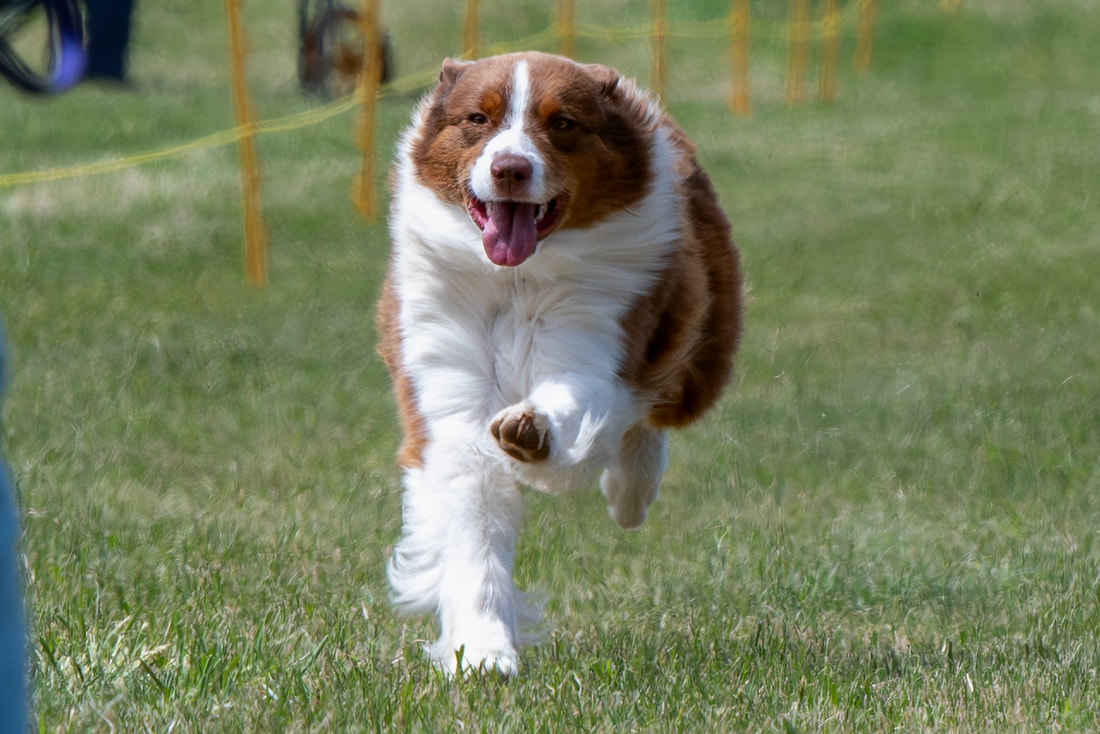
You put the work in. You taught the name, practised the recall, worked on the lead and celebrated the first quiet evening when your puppy finally settled beside you.
Now the dog who followed you everywhere is studying a smell as though you have ceased to exist. The lead is tight again. A passing dog produces far more interest than anything in your pocket. You find yourself saying, “But you KNOW this.”
It is frustrating. It can also feel personal, particularly when you have invested months in raising this dog carefully.
Adolescence can change what your dog finds difficult, exciting and worth paying attention to. Your job is to notice those changes and adjust the teaching, while keeping everyday boundaries clear.
That means taking the behaviour seriously. It also means resisting the urge to call every problem stubbornness, or every worrying change “just a teenage phase.”
Adolescence has a range, not a deadline
Dogs do not all enter or leave adolescence on the same birthday. The RSPCA’s adolescent-puppy guidance describes a broad transition that commonly begins between six and twelve months and continues into the second year. Breed, size and individual development affect the timing.
Puberty, physical maturity and social maturity are different milestones. A dog can look impressively grown while still needing substantial guidance through ordinary situations.
Keep that distinction in mind when someone says your dog is “old enough to know better.” Ask what the dog has actually learned, where they have practised it and what is happening around them today.
Age gives you context. It cannot tell you why a particular dog has begun avoiding touch, chasing traffic or panicking when left alone.
The change owners describe has some research behind it
In a 2020 study involving dogs being raised for guide-dog work, researchers found a temporary change in responsiveness around adolescence. Dogs in a behavioural test were less responsive to a familiar caregiver’s sit cue at eight months than at five months. In a larger questionnaire group, caregivers rated trainability lower at eight months than at five or twelve months. Responses also differed according to who was handling or rating the dog. Newcastle University’s account of the research explains those findings.
This was a particular population of dogs, not a timetable for every family pet. It does not establish that your dog is deliberately defying you, that your relationship is damaged, or that waiting until their first birthday will solve a problem.
It does give owners a useful reason to pause before deciding that several months of training have been wasted.
Before calling it regression, describe what changed
“He doesn’t listen anymore” is understandable, but it is difficult to act on. Write a description someone else could observe.
For example: “He turns towards me when I call him in the garden, but keeps moving towards dogs at the playing field.” Or: “She used to rest after dinner, but this week she keeps getting up and changing position.”
Those are different problems. They need different next steps.
Ask four questions:
- What is the actual behaviour? Pulling towards a smell, freezing near traffic and snapping during grooming should not share one vague label.
- Where and when does it happen? Record the location, what happened immediately before it and who was present.
- What has changed in the routine? Include visitors, work hours, walks, daycare, equipment and time alone.
- What else has changed in the dog? Appetite, movement, toileting, sleep and comfort belong in the conversation.
Start with observation. You can make a much better decision from a specific pattern than from a story about your dog’s intentions.
A young dog can be uncomfortable too
Pain is not reserved for senior dogs. Cornell’s guidance on recognising pain describes changes including reluctance to move, difficulty settling, altered sleep, reduced appetite, withdrawal and unusual reactions to touch.
If your dog suddenly resists the harness, hesitates at stairs or growls when you reach towards them, stop treating the moment as an obedience test. Contact your veterinarian and explain what is new. Avoid repeatedly provoking the reaction to see whether it happens again.
A short video of naturally occurring movement or behaviour can help, provided you can record it safely. Note whether the difficulty occurs after activity or at a particular time. Looking comfortable during one exciting moment does not settle the question of discomfort.
Abrupt or substantial behavioural change deserves veterinary attention, even when the dog is the “right age” for adolescence. Your veterinary team can advise how urgently they need to see your dog.
Check whether the skill was ready for this situation
A skill demonstrated in a quiet room has not necessarily been learned under the conditions you now expect it to work in.
The AKC’s guide to duration, distance and distraction explains why increasing those demands changes the task. Build them gradually, and make the exercise easier when the dog struggles.
Here is an illustrative comparison: yesterday you asked for a brief wait while standing beside your dog in the hallway. Today you are several metres away, another dog is approaching and you expect the wait to last while you finish a conversation.
The word may be the same. The assignment is much harder.
Choose a version your dog can currently manage, then develop it carefully. Our guide to teaching skills in the live environment explores how to make that progression useful outside the house.
Notice how much freedom changed as your puppy grew
This part is easy to overlook. Owners often relax supervision just as a young dog becomes physically capable of doing more.
The puppy pen comes down. The garden door stays open. The lead comes off because the puppy has always followed. Shoes return to the hallway. A dog who previously could not reach the counter can now reach dinner.
Review the arrangements you have quietly retired. Which still worked? Which freedoms were based on a few successful moments?
You can bring a gate back, close a door or supervise garden time again. Check fences, latches and equipment fit against the dog you have now. A barrier that contained a small puppy may be inadequate for a stronger, taller youngster.
Pair management with teaching. If a gate prevents access to guests, use suitable practice sessions to teach the greeting you want. If shoes keep disappearing, store them away and provide appropriate, supervised chewing options.
Management should make daily life workable while learning continues. Give the dog suitable company, movement, rest and activities within that arrangement.
Keep boundaries clear enough for everyone to follow
“Be good at the door” is too vague. Decide what actually happens when the door opens.
For a dog still learning, that might mean an adult secures the dog behind a comfortable barrier before admitting a visitor. Greeting practice happens separately, with someone available to coach and manage it.
Write down the household version. Who prepares the dog? Where do they wait? What does the visitor do? What happens if the dog cannot cope?
Do the same for getting out of the vehicle, passing other dogs and settling while the family eats. A workable routine includes a plan for the difficult day.
Consistency does not mean demanding an identical performance regardless of conditions. It means making expectations and responses understandable. The boundary can remain “we give other dogs space” while the amount of space changes.
You can be firm without turning every missed response into a confrontation. Repeating a cue louder and louder does not identify what your dog needs to succeed.
Make responding worthwhile, and check your timing
Ask what follows the response you want. Do you acknowledge a voluntary check-in? Does coming back sometimes lead to another enjoyable activity, or does it always end the outing?
VCA Canada’s training guidance explains that consequences matter from the dog’s perspective. Food, play, attention and access to an enjoyable activity can reinforce behaviour. What the owner intends as a reward may not be what that dog values in that moment.
Keep useful rewards available and pay attention to when you deliver them. A trainer can help you separate the action you intended to reward from the action happening when the reward actually arrived.
Use small, familiar food rewards that fit your dog’s diet, or another appropriate reward your dog enjoys. Necessary food, water and care should never depend on completing an exercise.
If the dog cannot engage, reconsider the setup before simply searching for a more exciting treat.
When recall slips, put safety back in place immediately
Do not keep testing a doubtful recall beside a road, livestock or wildlife. Use secure containment or suitable lead management while you rebuild it with professional guidance where needed.
A long line can provide room in an appropriate open area, but it needs careful handling. Use suitable, well-fitted equipment, usually a harness, and ask a trainer to show you how to manage the line. Prevent high-speed runs into the end. Keep it away from legs, other dogs and obstacles, and never wrap it around your hand or body.
Use a shorter, manageable lead where people, traffic or confined spaces require it. Follow local lead rules.
Plan practice rather than waiting for an emergency: a safe place, an achievable opportunity and a clear reward when the dog returns. Avoid making every successful return the end of everything enjoyable.
If recall fails in a real situation, secure the dog safely and reconsider the next setup. A previous good week is not permission to gamble with today’s response.
More exercise is a question, not an automatic prescription
Look at the whole day before adding another long walk or another round of fetch.
What does the dog actually get to do? Is every outing a busy social event? Are there chances to investigate calmly? Does activity suit their body? Can they rest without someone interrupting?
For a working-breed youngster, useful work may include carefully introduced scent games, retrieving skills or another suitable activity developed with an experienced instructor. Interest in work deserves an outlet. It does not tell you that the dog should be kept moving until they are exhausted.
Keep a simple record of what happens after different activities. Compare an ordinary evening after a quieter outing with one after a busy class. Include the next morning. This is information to discuss with your trainer or veterinarian, not proof of a diagnosis.
Ask your veterinarian about appropriate exercise if you are unsure about growth, conditioning or discomfort. There is no single distance target that fits every adolescent dog.
Give rest a real place in the household
A bed in the busiest doorway may look like a resting place to a person. Consider what the dog experiences there: feet passing, children stopping to touch them, another dog investigating, and the possibility of missing something exciting.
Provide an appropriate quiet option and protect time there. Ask family members to leave the dog alone when resting. If you use a crate or pen, it should be a space the dog can use comfortably, with their care and toilet needs met.
Do not assume a dog is comfortable simply because they have stopped moving. Equally, do not interpret every restless evening as unused energy.
Look for a pattern. If your dog repeatedly cannot settle, becomes distressed in confinement or has a new change in sleep, seek help rather than imposing longer confinement or a rigid sleep target.
Fear and changing social preferences deserve different responses
A dog who calmly chooses to stay with you while others pass may be perfectly content. A dog who freezes, hides, stiffens or tries to escape is giving you different information.
Dogs Trust’s body-language guidance emphasises the whole dog and the context. A single tail movement cannot tell you everything about an encounter.
Respect the dog who prefers their own people and their own adventures. They can learn to heel beside you, move aside and allow others to pass without greeting. Our article Your Dog Does Not Need to Be a Social Butterfly explains why that is a reasonable life.
New or escalating fear needs attention. Do not drag a worried dog towards something to prove it is harmless, or book more crowded outings to “get them over it.” AAHA’s behaviour guidance warns that forced exposure can worsen fear and recommends assessment when dogs begin withdrawing or showing fear.
You do not need to identify a numbered “fear period” before helping your dog. Create space, leave an unsuitable situation and get advice on a gradual plan.
Your voice still matters. “We need room” is a complete, responsible instruction.
Hormones are part of the picture
Puberty can bring reproductive behaviours and new management responsibilities. Review secure containment and prevention of accidental mating with your veterinary team if your dog is intact.
Be cautious about promises that neutering will solve a difficult adolescence. VCA Canada’s discussion of neutering and behaviour distinguishes hormonally influenced behaviours from other causes. It recommends individual decisions about timing, health and behaviour, rather than treating surgery as a general solution for aggression.
Ask what specific behaviour an intervention is expected to change, what evidence supports that expectation and what management or training will still be needed. Keep the health decision with your veterinarian and the teaching plan clear.
Know when this needs individual help
AAHA identifies several changes around social maturity that warrant veterinary assessment, including aggression, increasing fear, distress when alone, repetitive behaviours, toileting changes and marked shifts in activity.
Do not wait for a bite, an escape or a household crisis before making the call. If behaviour is escalating, someone feels unsafe, or ordinary care is becoming difficult, arrange help now. Use suitable separation and management while waiting for advice.
Tell the professional what has happened plainly. “He snapped when I reached for the stolen sock” is more useful than “he can be cheeky.” Do not recreate a risky incident for a video.
A qualified trainer can help with learning and handling. Your veterinarian can assess health contributions and whether a veterinary behaviour referral is appropriate. Sometimes both are needed.
A two-week reset for the routines you can safely practise
This is an owner planning framework, not a treatment protocol or a promise to fix adolescence in fourteen days. Use it for manageable training difficulties. It must not delay assessment of pain, fear, aggression, separation distress or other concerning changes.
Choose two useful goals. For example: leaving the house without rushing the doorway, and turning with you to give a passing dog space. Avoid trying to improve the entire dog at once.
Days | What to do | What to record |
|---|---|---|
1–2: Observe and organise | Describe the two difficulties. Identify unsafe situations to prevent. Check the household routine, equipment and available help. Arrange professional assessment wherever indicated. | Where each difficulty happens, what precedes it, and the version the dog already manages comfortably. |
3–5: Establish a workable starting point | Practise a brief, achievable version of each goal. Decide who handles the dog and who manages doors, children or visitors. Keep the rest of the day realistic. | The setup, your cue or action, the dog’s response and what followed. Note anything that made the session easier or harder. |
6–8: Check consistency between people | Have another involved adult use the agreed routine where safe. Compare instructions and timing. Resolve differences between yourselves before expecting the dog to understand them. | Which parts of the routine transfer, and where the person needs coaching or the dog needs more support. |
9–11: Try one modest progression | If the current version is going well and the dog is comfortable, make one small change. Repeat an easier version if needed. Keep safety arrangements in place. | Exactly what changed. Record the dog’s response without calling an unsuccessful attempt a failure of character. |
12–14: Review and choose the next step | Compare equivalent situations. Keep the routines that help, simplify those that do not and take unresolved questions to your trainer or veterinarian. | What is more manageable, what remains difficult and the next specific question you need answered. |
You can stay at any stage longer. There is no graduation requirement on day fourteen.
Use a notebook or a record you will actually maintain. A useful entry might read: “Tuesday, quiet side street. Turned away with me before the approaching dog reached the corner. Needed more distance on the busier return route.” That is an illustrative entry, not a target every dog should meet.
Record uneventful successes too. They show you which conditions are working.
Ask a trainer to see the difficult part
If the problem happens at the gate, explain the gate. If it begins after twenty minutes of an outing, say that. A beautiful sit in the trainer’s room may tell you little about the moment you need help with.
Ask how the trainer will observe a safe version of the situation, teach you what to do and follow up on the result. Ask for an explanation of methods and equipment before they are used, including what changes if your dog becomes distressed.
For a working breed or sport prospect, look for relevant experience as well as clear instruction. You want someone who can develop the dog’s abilities while recognising the limits of a young learner.
Use our comparison of online training and working with a trainer to consider the support you need, and explore the trainer directory to find services to assess.
Keep a life together while you work through this
It is easy for every interaction to become an assessment of whether your dog is improving. Make room for time together that you both enjoy and can manage safely.
A quiet outing, a familiar game, a little purposeful work or company while you get on with your day can matter. You do not have to turn every adventure into an exam.
If you are overwhelmed, get practical support. Tell your breeder, trainer or veterinary team what is making daily life difficult. Be specific about the help you need.
Your adolescent dog still needs you to set boundaries, notice discomfort, provide appropriate opportunities and speak up when a situation is unsuitable. The plan may need to change several times as they grow.
You have not wasted the work you put into your puppy. Use what you know about this dog, and keep teaching the dog standing in front of you today.
Continue through Life With Your Dog for practical guidance from the first days home to the senior years.
Sources checked September 22, 2026. The two-week framework is editorial guidance for organising everyday practice; individual health and behaviour concerns need professional assessment.
Start Your Next Adventure
Love discovering dog-friendly places like this?
Join Paw Rewards and use our Pawtastic Vacation Planner to plan your next trip, discover dog-friendly destinations across Canada, track your adventures, compete in challenges, and earn Treats for every walk and every memory you create together.
Redeem your Treats for rewards including Puppy Packs, PAWS Magazine subscriptions, Big Country Raw products, Seasonal Boxes, and exclusive offers from our amazing partners.
Because every adventure deserves a reward.
Keep exploring
Everything you need — from finding your next dog to caring for the one already at your feet.
Comments (0)
Loading comments…