September 22, 2026 · Angelique
The Live Environment Matters: Teaching Skills Where Your Dog Will Use Them
A dog’s training needs to work in the life you actually share. Here’s how to practise around real distractions, adjust before things unravel, and build useful skills from puppyhood through the senior years.
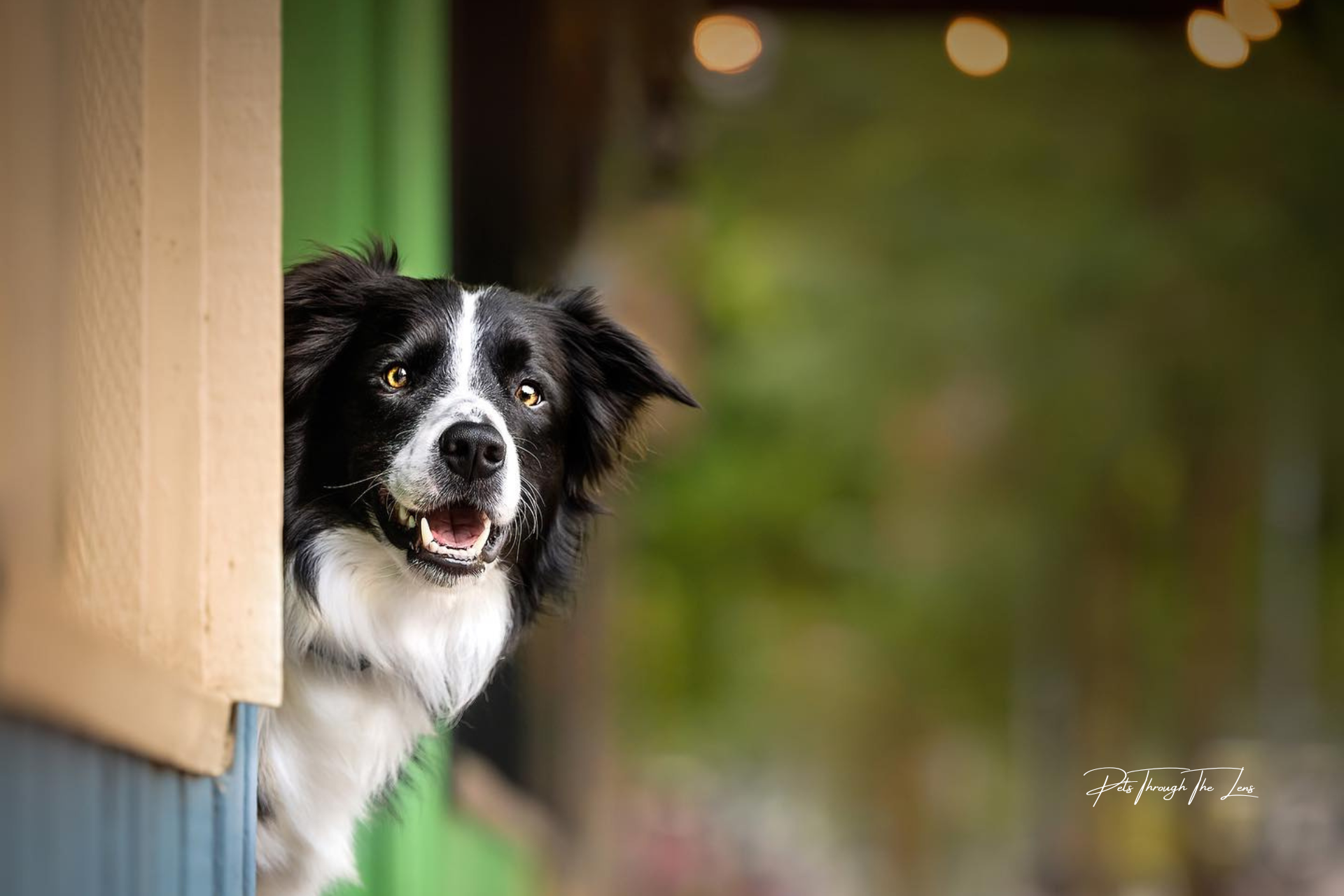
You have the leash in one hand, your keys in the other, and a dog who needs to get outside. The elevator opens. Someone is standing there with another dog. Suddenly, the tidy little exercise you practised last night feels a long way away.
This is where training has to meet the life we actually live.
We need skills that help at the front door, on a narrow sidewalk, when visitors arrive, and when plans change. Getting there takes practice in those situations, with enough thought behind the setup that both you and your dog have a fair chance.
In YouTube or Online Dog Training Versus Hiring a Trainer, I looked at choosing the right kind of support. This article is the next step: how to take something your dog has learned and help it become useful away from the original lesson.
I want owners to understand this part properly. “Practise with distractions” is easy advice to give. It leaves out an awful lot.
What has your dog actually learned?
A familiar cue comes with a whole scene: where you stand, what your hands do, who is nearby, and what usually happens next. A response in one setting gives you a starting point for another. It does not establish reliability everywhere.
Trainers call transferring learning across situations generalisation. Consistent cues and practice in different locations help build that transfer. The American Kennel Club’s guide to consistency explains why changes in surroundings and human behaviour deserve attention.
Write your goal as something you can observe. “Behave outside” gives you very little to work with. “Turn towards me when I say your name on this quiet stretch of path” gives you a specific response, in a specific place.
For this article, our example will be a check-in: your dog briefly turns their head towards you. It does not require sustained eye contact. Start with a response your dog already understands in a comfortable setting. If it is still unclear there, work on the foundation first.
Also decide what you need today. There is a difference between setting up a lesson, checking a familiar skill under a modest new challenge, and simply getting your dog outside for a toilet break. You do not owe anyone a training demonstration during an unavoidable difficult moment.
Distance, duration and distraction: the details that change the job
The familiar “three Ds” describe how long a behaviour lasts, how far you are from your dog, and what else is happening. When one becomes harder, ease the others. The AKC’s explanation of duration, distance and distraction is a useful introduction.
One detail needs spelling out: distance from you and distance from a distraction are different things. Asking for a response farther away from you can add difficulty. Moving farther away from something your dog finds challenging can make the situation more manageable.
Think through the actual change you are making:
Duration: are you asking for a brief pause, or expecting your dog to wait while you have a conversation?
Your position: are you beside your dog, facing them, seated, or several steps away?
The distraction: is that person standing still, walking across your view, or approaching directly?
The surroundings: is there room to move away, or have you chosen a narrow entrance?
“We practised near another dog” tells only part of the story. A dog resting across an open field creates a different exercise from a dog barking behind a fence as you squeeze past. Plan around the situation in front of you, rather than treating every sighting as the same training opportunity.
Choose the place before you choose the exercise
Look at a location without your dog first when you can. Where do people enter? Can a dog appear around a blind corner? Does the quiet path become a school pickup route later? Where will you go if you need more space?
My starting requirements would be straightforward:
Dogs are permitted, and you can respect other people’s space.
You can see activity coming and leave without pushing through it.
The footing and weather are comfortable for your dog and manageable for you.
You can handle the leash and deliver a reward without juggling shopping, a phone and another dog.
A private yard is useful if you have one. If you do not, your first change might be another room, a quiet permitted communal space, or a short outing at a less busy time. The setting should fit your housing, mobility and daily responsibilities.
Make the arrival part of the plan. A parking lot, lobby or gate may be the hardest part of the whole trip. Check before opening a car door; keep your dog safely secured. If the entrance is already beyond what you can manage, choose another location or go home.
Keep a secure leash and suitable, properly fitted equipment where needed. Successful practice does not make an unfenced area safe or remove local leash requirements. Equipment should support a safe setup; it cannot create understanding by itself.
Read the dog throughout the session
Watch the whole dog and the circumstances. A wagging tail, a quiet dog or a dog who takes food does not, on its own, prove comfort.
Look for changes from your dog’s usual behaviour: increasing stiffness, turning away, repeated scanning, a tucked posture, attempts to retreat, or an inability to disengage from something. Lip licking and yawning can occur with stress, but single signals need context. Food refusal also has several possible explanations.
The Dogs Trust body-language guide explains why posture, expression and situation must be considered together.
For practice, look for a dog who can notice their surroundings, respond to something easy, and move with you without growing distress. If that picture deteriorates, create space, simplify or finish. Freezing, frantic escape attempts, growling or escalating barking and lunging are reasons to stop the exercise and make the situation safer.
Do not demand another sit before allowing a worried dog to move away.
A practical ladder for taking a familiar skill outside
This is an example plan for an ordinary, low-risk check-in exercise. It is not a treatment plan for aggression or severe fear. Use your dog’s responses to choose the next step; the rows are not a five-day schedule.
Practice stage | What to do | When to simplify or stop |
|---|---|---|
1. Comfortable starting place | Use your familiar cue for a brief head turn towards you. Reward that response. Keep the same clear definition of success. | If the response is unclear here, return to teaching it. Check comfort, reward delivery and whether your cue is consistent. |
2. Another quiet place | Try the same brief response in another room or a secure, quiet outdoor space. Stay close and keep your familiar cue. | If your dog cannot engage, let them orient safely. If the place remains too difficult, return to an easier setting. |
3. One planned change | With an adult helper’s agreement, add a small, predictable change, such as the helper standing at a comfortable distance. | If attention stays fixed on the helper or comfort declines, have the helper move farther away or leave. |
4. The edge of everyday activity | Choose a permitted, open place where you can observe occasional activity from a distance. Ask for the familiar response during a manageable moment. | If people or dogs close the gap, use your exit. You do not have to complete a repetition before leaving. |
5. A small piece of your routine | Practise on a short, manageable section of a normal outing. Keep the rest of the trip simple enough to handle safely. | If the route is unexpectedly busy, abandon the lesson. Change the time, place or expectation next time. |
At each stage, allow safe observation before you start asking questions. Standing still with a dog does not automatically make the experience easy; watch whether they are settling into the surroundings or becoming increasingly concerned.
Move on when the current version looks comfortably familiar across more than one occasion, including the moments between rewards. A single good response is encouraging. It is limited evidence for a much harder exercise.
If a modest change makes things fall apart, return to the workable version and reconsider the size of the step. You have learned something useful about the plan.
Keep sessions easy to end. You might take your leash and reward pouch out, practise briefly, then return inside. Leaving yourself time for a graceful exit is much more useful than trying to squeeze training into the final minutes before an appointment.
The person holding the leash is learning too
A training video can show beautiful timing. It cannot move your keys, unzip your coat or stop your leash tangling around your shopping bag.
Rehearse your own mechanics somewhere quiet. Where are the rewards? Can you reach them with winter gloves on? Which hand holds the leash? Where will your dog be when you deliver the food? Can you turn and leave while keeping both of you secure?
If you use a learned marker, such as a click or “yes,” mark the response you wanted and follow it with the promised reward. The marker helps identify the moment; it still needs a consistent association with the reward. The AKC’s mark-and-reward guide explains that timing.
In our check-in example, mark the head turn. Avoid reaching for food first if that movement has become the only thing your dog responds to. If you miss the moment, reset more simply rather than turning the next attempt into a rushed scramble.
Keep delivery safe: do not reach across your dog in a way that pulls you into the path of a bicycle, or toss food towards traffic.
Choose a reward your dog actually values in that setting. Food may be convenient; a toy or brief play may suit another exercise where there is safe space. Prepare what you need before starting. If your dog is struggling, waving something tastier under their nose is not a reason to move closer to the problem. Reconsider the setup first.
Your posture deserves its own practice. Try a familiar exercise while standing naturally, then on another occasion while seated or turned slightly differently. Trainer Lisa Desatnik discusses changes in human position in her guide to generalisation and discrimination. Introduce those changes deliberately, rather than assuming the spoken word is the only information your dog has been using.
Other dogs and people need a plan
For a helper exercise, agree on the details before bringing your dog into position. Where will the person stand? What will they do? How will you ask them to stop? Which direction will each of you leave?
Start with less activity than you think you need. A person who stands still is easier to coordinate than a person who approaches, talks, reaches out and produces food all at once. If you later practise movement, agree on a route that preserves space.
A helper with a dog adds another animal’s needs. Both handlers must consent, both dogs need to be comfortable, and neither should be trapped in the arrangement. A qualified trainer can help choose an appropriate helper and location.
I would not use a busy dog-park gate for this exercise. You cannot arrange who arrives, how close they come, or whether a loose dog interrupts. Save this practice for somewhere you can control enough of the situation to teach clearly.
Be ready to say, “We’re training and need some space, thank you.” Keep moving if necessary. A stranger’s wish to greet your dog does not have to become part of your lesson.
Do not recruit children or unsuspecting passers-by to test a dog’s response. Dogs with a bite history, serious fear or handling risks need an individual professional plan before staged encounters.
Weather, surfaces and everyday life change the exercise
Consider the practical difference between a dry, quiet practice area and your actual walk in November. You may be wearing a hood. Your hands may move differently in gloves. Leaves may blow across the path. The place where you usually stop may be wet or slippery.
Choose what is reasonable to practise that day. Skip a sit on an uncomfortable surface. Find secure footing. Postpone a session when conditions make handling unsafe. Accommodating discomfort is part of looking after your dog.
Indoor details count too: an automatic door, a reflective floor, a shopping cart, or a mat placed beside a busy walkway. You can inspect those details before deciding whether an outing is suitable.
Keep access permission separate from training ambition. A pet-friendly shop can decline a training visit. A café table does not provide an escape route just because dogs are allowed on the patio. Speak to the business where needed and choose a time and position that respect other customers.
Write down the conditions that helped. “Quiet side entrance, dry ground, before the lunch rush” is a plan you can actually repeat.
Adjust the expectations as your dog’s life changes
Puppies
For a puppy, an outing may be largely about experiencing a manageable piece of the world. Keep those experiences positive and appropriate to the individual. Early socialisation matters, and exposure should avoid overwhelming the puppy. Discuss local infection risks and suitable outings with your veterinarian rather than using a universal vaccination timetable from a blog. The American Veterinary Society of Animal Behavior’s puppy-socialisation statement addresses this balance.
You can also read our guide to safe socialisation before vaccinations are complete. Leave room in your plan for toilet needs, rest and simply going home.
Adolescents and adult dogs
Record what is happening now instead of arguing with last month’s results. If today’s version is difficult, adjust it. “He did it before” is useful history, but it does not tell you what changed.
For a working breed, include the situations your household actually faces when you choose goals: movement along a fence, visitors unloading equipment, or walking away from an activity. Arrange safe practice with appropriate help. Do not manufacture danger by using passing traffic, wildlife or livestock as a test.
A newly adopted adult also needs a starting assessment. You may know very little about the places, cues and handling they have experienced. Begin with what you can observe safely.
Senior dogs
A senior who becomes reluctant to sit, hesitates on a surface or seems less responsive deserves attention to health and comfort. Chronic pain can show up as subtle behaviour changes that owners mistake for ordinary ageing. Hearing and vision changes may also affect daily safety. The AAHA senior-care guidance emphasises recognising pain and adapting the environment.
Discuss new changes with your veterinarian. Follow their advice about movement and support; improve footing, shorten the task, and choose cues your dog can perceive comfortably. An older dog may need help with a doorway they once managed easily.
I want the standard to remain useful participation and comfort throughout a dog’s life. Their younger performance is not a debt they owe us.
When the outing goes wrong
Imagine that you chose a quiet patch of grass, then a delivery vehicle stopped nearby and two dogs appeared behind you. Your dog barked, pulled, and could no longer do the little exercise that had been going well.
First, deal with the present situation: create space when safe, use your planned exit and finish the lesson. Do not stay beside the problem insisting on one final successful repetition.
Once home, allow a quiet return to the normal routine. Look at whether your dog settles back to their usual behaviour. There is no universal recovery countdown you need to meet before all dogs can learn again.
Before the next outing, write down what changed. Was your exit blocked? Did you overlook the loading bay? Was the location manageable only until several events happened together? Change something concrete in the next plan.
If the same problem keeps returning, bring those notes to a professional. A short video can help if it is captured safely during ordinary activity; never provoke or recreate an incident for the camera. Cornell’s veterinary behaviour service uses history and medical evaluation to investigate behaviour concerns and explains how safely obtained video can contribute.
Seek veterinary input for sudden or concerning changes. Persistent panic, escalating aggression, bite risks, or difficulty keeping anyone safe warrant individual help. An article cannot determine the cause from a description of barking.
Measure progress you can use
Keep a few notes after practice. Record the place, conditions, task, response, signs of comfort or difficulty, and what you will change. Separate observation from interpretation.
Here is an illustrative entry, not a distance prescription:
Tuesday, quiet end of the recreation field. One adult stood roughly 25 metres away. Asked for a check-in three times; dog turned towards me twice. During the third attempt the person started walking towards us, and my dog watched them continuously. We moved away and ended. Next time: agree that the helper stays still and keep the same location.
That gives you something to act on. “Ignored me again” does not.
Look for a familiar response in several suitable settings, with manageable behaviour before and afterwards. Notice whether you need fewer prompts, whether your own handling is smoother, and whether you can make sensible adjustments earlier.
Keep the limits visible too. Success on a quiet path does not establish reliable recall around wildlife, or readiness for a crowded event. Choose the next challenge from what you have actually observed.
Make the next outing small enough to teach something
Choose one useful skill, one workable place, and an exit. Decide what you will reward and what will make you stop. That is plenty for a starting plan.
If you need support, ask a trainer how they will help you practise in the places that matter to your household. A live online session can sometimes show your actual setup; an in-person session may make planning, observation and safe handling easier. The important question is whether the coaching helps you and your dog function in that environment.
You can browse the Paw Rewards trainer directory and ask providers directly about qualifications, methods and experience with your needs. Our Life With Your Dog guide connects this work with the wider changes from puppyhood to the senior years.
Training earns its place in our lives when it makes an ordinary day more manageable. Start with an ordinary moment you can make easier for the dog beside you.
Sources checked September 22, 2026.
Start Your Next Adventure
Love discovering dog-friendly places like this?
Join Paw Rewards and use our Pawtastic Vacation Planner to plan your next trip, discover dog-friendly destinations across Canada, track your adventures, compete in challenges, and earn Treats for every walk and every memory you create together.
Redeem your Treats for rewards including Puppy Packs, PAWS Magazine subscriptions, Big Country Raw products, Seasonal Boxes, and exclusive offers from our amazing partners.
Because every adventure deserves a reward.
Keep exploring
Everything you need — from finding your next dog to caring for the one already at your feet.
Comments (0)
Loading comments…