September 23, 2026 · Angelique
Play or Bullying? Reading Dog-to-Dog Interaction
Healthy play gives both dogs room to choose. Learn to recognise persistent pursuit, read more than tail wags and noise, create safer breaks and protect dogs who want to opt out—from puppies to seniors.
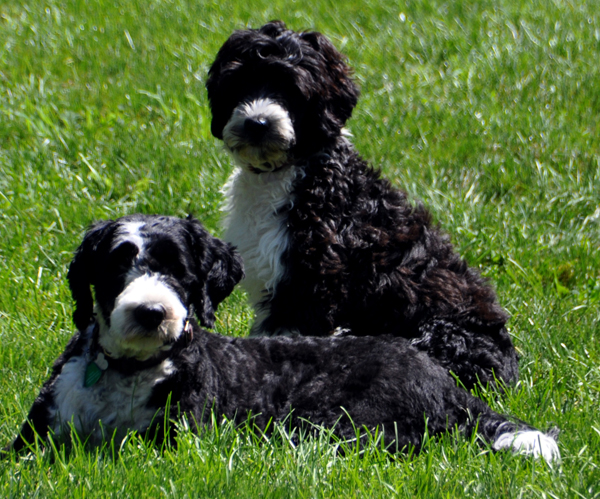
One dog is running. Another is chasing. There is growling, wrestling and a surprising amount of teeth.
Someone laughs and says, “They’re just playing.” Someone else looks worried. The dog near the fence has tried to leave twice, but nobody has noticed that part.
This is where owners need more than a list of friendly-looking signals. You need to watch what BOTH dogs are doing, what happens when one asks for space, and whether either dog can actually end the interaction.
Play should leave room for both dogs’ choices. You do not need to wait for a fight, a scream or an injury before stepping in.
If a fight has already happened, separate the dogs safely and contact your veterinarian promptly. Breathing difficulty, collapse, uncontrolled bleeding or pale or blue gums require emergency care. Bite damage can be hidden beneath fur or under apparently minor marks. VCA Canada explains why veterinary assessment matters after a fight.
Watch the interaction, not just the loudest dog
It is easy to watch the dog doing the chasing, bouncing or barking. Make yourself look at the dog receiving that attention.
Are they turning back towards their partner with a loose body? Are they choosing to approach again? Or are they repeatedly moving behind you, pressing towards the gate or trying to get underneath something?
Then look back at the other dog. Do they slow down when their partner stops? Allow a pause? Let them walk away? Or immediately close the distance and start again?
The important information is often in that response. An invitation is one thing. Continuing to push after the other dog tries to leave is something else.
Use a plain description: “She moved away three times, and he followed and jumped on her each time.” That gives you a reason to act without arguing about whether either dog is “friendly.”
What comfortable play can look like
The American Kennel Club’s guide to rough play describes loose, exaggerated movement, play bows and voluntary returns to the game. Wrestling and vocalising can occur during play; noise alone does not tell you that a fight is happening.
Look for a combination of reassuring features: bodies that remain flexible, movement with a bouncy quality, pauses and opportunities to disengage. Notice whether invitations receive a willing response.
A play bow can help you understand a moment. It cannot guarantee that everything following it will remain comfortable. A game can begin well and become too much.
For example, two dogs might start with brief wrestling, separate to sniff and then approach each other again. Later, one begins lying beside their owner while the other repeatedly climbs over them. Assess the interaction you have now, even if the first few minutes looked lovely.
Healthy play does not have to be exactly 50–50
You will often hear that dogs must take equal turns chasing, being chased or being on top. Changing roles can be useful information, but a stopwatch is not a welfare assessment.
In a study of play within four litters, researchers Ward, Bauer and Smuts found that play did not follow equal, 50–50 roles. They also observed preferences for particular play partners. These findings describe the dogs studied; they do not provide a rule that makes any uneven interaction safe.
The practical question is whether the apparent imbalance comes with comfortable participation and a usable exit. A dog who often chooses to run first is different from a dog who keeps running because another dog will not leave them alone.
Do not dismiss an unhappy dog because “some dogs like being chased.” Find out whether THIS dog can stop.
Tail wagging, raised hair and rolling over need context
A wagging tail does not certify a friendly interaction. Raised hair does not, by itself, prove aggression. A dog lying on their back may be playing, or may be tense and trying to reduce a threat.
Dogs Trust’s body-language guide explains why posture, tension, facial expression and context need to be read together. It also describes freezing, avoidance, hiding and frantic activity among signs that deserve attention.
A still photograph leaves out what happened before and after it. Even a short video can miss the attempts to leave that came before the apparently playful moment.
When you are unsure, create a safe pause. You can gather more information once the pressure has stopped. You do not have to keep the dogs together while you debate the meaning of one tail movement.
When play becomes persistent pressure
“Bullying” is useful everyday language for an interaction that has become persistently one-sided. It is not a diagnosis or proof that a dog has a malicious personality.
The Ontario SPCA’s park guidance identifies persistent pursuit by one dog or a group as a concern and advises leaving when a dog is bullying or being bullied.
Watch for repeated crowding, pinning, body contact or pursuit that continues when the other dog attempts to disengage. A dog should not have to keep defending their resting place or use a person’s legs as their only refuge.
Mounting also needs context. It can occur with excitement or stress, among other motivations. Whatever the cause, repeated mounting of a dog who is trying to escape needs interrupting. You do not need to settle a theory about dominance before giving that dog room.
Be especially attentive when the same dog always bears the physical cost: getting knocked over, crowded against a fence or prevented from reaching their person. “Nobody has bitten” is a very low standard for a good afternoon.
A pause gives the quieter dog a choice
The BC SPCA describes interrupting play and observing whether the pursued dog wants to continue. Owners sometimes call this a consent check.
Use it during manageable play, before dogs are in conflict. Ask the pursuing dog’s handler to call their dog away and create space. Let the other dog decide what to do without encouragement or renewed pursuit.
If they walk away, investigate the ground or stay with their person, respect that choice. If they approach loosely and offer another invitation, that is useful information. It does not override exhaustion, a dangerous size mismatch or repeated roughness.
A dog returning once is not a pass for the rest of the visit. Keep observing.
Do not grab into wrestling dogs or hold one still while another crowds them. If the handlers cannot create a comfortable break, end the session safely and seek help with the setup. A check that adds restraint and pressure can create a different problem.
Practise the break before you need it
Plan the interruption with the other owner while things are calm. Decide where each person will move, how the dogs will be called away and where they can rest separately.
Practise your own dog’s response in easier surroundings first. Our guide to training in the live environment explains why a response in the kitchen may need more teaching before it works around an exciting dog.
During a suitable playdate, use natural pauses to practise moving apart. Reward your own dog once there is safe separation. Avoid tossing food into a cluster of dogs or holding a treat between competing noses.
A break should offer relief: space, water when needed and a chance to settle. Standing nose-to-nose on tight leads while both dogs strain is not much of a break.
Decide what you will do if the same difficulty returns. Repeatedly stopping a game that immediately becomes overwhelming again is information to end that pairing for the day, not an obligation to keep restarting.
Size and play style both matter
A large, friendly dog can injure a smaller dog accidentally. The AKC’s guidance on dogs of different sizes stresses that injury risk increases with a larger size difference, even when the dogs get along.
Look beyond weight alone. Consider speed, strength, body contact, coordination and whether a dog adjusts when their partner needs less intensity.
A gentle-looking moment does not make full-speed collisions sensible. Choose more compatible companions and suitable separate areas when the mismatch creates avoidable risk.
Breed tendencies can help you ask better questions, but they do not excuse the effect on another dog. If a herding dog repeatedly controls another dog’s movement, or an enthusiastic youngster keeps body-slamming a quieter companion, the owner still needs to intervene.
Your working or sporting dog may enjoy structured activity with you far more than a random group wrestling session. Give them useful work and suitable outlets without making another dog absorb unwanted attention.
One good friend does not prove a whole group will work
A dog can enjoy one familiar companion and struggle when three others join in. Reassess whenever the group changes.
Look at what happens to the least comfortable dog. Do they still have a clear route away? Are several dogs following the same individual? Does every pause attract another dog who restarts the contact?
Also look at the location. A narrow gate, a corner behind a bench or a slippery patch can make a poor place to manage an intense interaction. In a Canadian winter, ice and packed snow can reduce the room you have for safe movement even in a large enclosure.
The San Francisco SPCA’s park guidance emphasises active supervision and responding when a dog looks overwhelmed or begins persistently bothering others.
Put the phone away. If you cannot track your dog and their partners, choose a smaller, more manageable arrangement. Our article on dog parks, their benefits and their risks helps with that broader decision.
Toys can change the question entirely
Dogs running together after a ball may appear to share a game. Check whether both are comfortable when one reaches it first.
Food and toys can become things dogs guard; the AKC’s discussion of dog conflict includes competition over resources among possible triggers.
If one dog stiffens over a toy, blocks access or repeatedly pursues the dog carrying it, stop treating the scene as ordinary chase. Separate the dogs safely before putting the item away. Do not reach between them or grab a guarded object.
You can arrange social time without shared toys and give each dog their own retrieving or chewing session separately. The playdate does not need to include everything they enjoy individually.
Puppies need protection, not a lesson from a fed-up adult
A puppy should not be left to cope with repeated intimidation because someone believes it will toughen them up. Nor should an adult dog be expected to tolerate endless jumping, biting and climbing.
The AKC’s puppy-play guidance advises close supervision, short sessions, attention to hiding or trembling, and allowing a reluctant puppy to opt out.
Protect both sides. Give the puppy appropriate activity and rest. Give the adult uninterrupted places and times to be left alone. Use suitable household separation when you cannot supervise.
If the adult moves away, redirect the puppy before they follow and climb on again. Do not wait for the adult to make the message louder.
A good puppy class should help owners recognise these moments. Free play is an optional activity within teaching, not proof that the class is doing its job.
Adolescents, adults and seniors need different allowances
Assess the dog in front of you today. The adolescent who has become larger and faster may need a different arrangement from the one that worked when they were a small puppy. The adult who enjoys one friend may have little interest in unfamiliar dogs.
A senior may still want company while needing less impact, shorter activity or more protection from an enthusiastic youngster. Let them share a quiet outing without requiring them to join the wrestling.
New reluctance, irritability or withdrawal also deserves attention. Cornell’s guidance on pain describes changes in movement, interaction and reactions to touch. Contact your veterinarian when behaviour or comfort changes, rather than assuming your dog has simply become grumpy.
Consider what you see after the outing too. Note limping, difficulty settling, reluctance to move or a change in ordinary routines. Share those observations with your veterinary team. Looking eager at the gate does not settle whether the activity suits the dog’s body.
When your dog is the one who will not stop
Be honest. It can be uncomfortable to recognise that your dog is spoiling another dog’s experience, especially when yours looks delighted.
Call your dog away, take responsibility and change the arrangement. You can say, “Mine needs a break. I’m taking him out.” There is no need to blame the other dog for being too sensitive.
Notice the pattern for future planning. Does the difficulty begin when another dog runs? When the group gets larger? After a toy appears? With a particular play style?
Take those observations to a qualified trainer if you need help. Ask for work on disengaging, responding around dogs and selecting suitable activities. Our guide to choosing a dog trainer offers questions to assess that service.
Another dog should not have to frighten or injure yours to teach a boundary that you can manage.
When someone tells you to let them sort it out
You are allowed to disagree and leave.
“Please call your dog away.” “Mine is finished.” “We need space.” These are clear, responsible statements.
You do not owe a debate about which dog started it. If the other owner will not help create space, focus on a safe exit and a more suitable arrangement next time.
Your dog does not have to engage to prove they are well behaved. They can learn to walk beside you, move aside and let others pass. They can enjoy their own people, their own adventures and a quieter social life.
That is the point of Your Dog Does Not Need to Be a Social Butterfly. Responsible ownership includes respecting the dog who says no.
Three everyday scenes, and what to notice
These are illustrative examples, not assessments of real dogs or substitutes for professional observation.
The noisy friends: Two familiar dogs wrestle noisily, separate, sniff and approach each other again. Both have room to leave. Keep supervising and offer breaks; the volume alone is not the deciding factor.
The quiet pursuit: One dog repeatedly follows another behind a bench. The pursued dog stays low and tries a different exit. There is little noise. Create separation and end that interaction. Silence has not made it comfortable.
The returning youngster: A young dog returns after every pause but is repeatedly knocked down by a much larger partner. Choose a safer activity or companion. Willing participation does not remove a physical mismatch.
In each example, consider both preference and safety. Owners are responsible for the conditions even when a dog appears keen to continue.
If the interaction has become a fight
A play break and an active fight are different situations. Do not reach for collars, put hands near mouths or place your body between fighting dogs. Even your own dog may bite during the conflict.
Move children and bystanders away. If a solid barrier can separate the dogs without putting you within reach, use it. Avoid attempting a physical manoeuvre from a written description. The BC SPCA’s safety guidance stresses the danger of direct contact and the role of barriers.
Once separated, prevent renewed contact and arrange veterinary advice. Do not put them back together to see whether they have “got it out of their systems.” Painful or frightened dogs may resist handling, so ask the clinic how to manage examination and transport safely.
After immediate care, discuss further assessment and a management plan with your veterinarian and an appropriately qualified behaviour professional. Recovery should not be tested through another uncontrolled encounter.
A short observation checklist to take with you
Use these questions during ordinary, manageable interactions. They are prompts for observation, not a scoring system that certifies safety.
- Both dogs: Have I watched the dog receiving the attention as carefully as the one initiating it?
- Choice: Can either dog leave without being followed, blocked or climbed on?
- Change: Has movement become tenser, contact harder or pursuit more persistent?
- Break: Can the handlers create space comfortably, and what does each dog choose afterwards?
- Fit: Do size, play style, health and footing make this a sensible activity?
- Responsibility: If my dog is creating the pressure, am I stopping it?
- Exit: Am I willing to finish now, even if we only just arrived?
You can have a good outing that includes very little dog-to-dog play. A walk, some sniffing, a bit of work with you and room to observe can be enough.
Protect the dog who wants to leave. Guide the dog who keeps pushing. Let enjoyment, comfort and safety decide when the game is finished.
Explore more practical guidance for every stage in Life With Your Dog.
Start Your Next Adventure
Love discovering dog-friendly places like this?
Join Paw Rewards and use our Pawtastic Vacation Planner to plan your next trip, discover dog-friendly destinations across Canada, track your adventures, compete in challenges, and earn Treats for every walk and every memory you create together.
Redeem your Treats for rewards including Puppy Packs, PAWS Magazine subscriptions, Big Country Raw products, Seasonal Boxes, and exclusive offers from our amazing partners.
Because every adventure deserves a reward.
Keep exploring
Everything you need — from finding your next dog to caring for the one already at your feet.
Comments (0)
Loading comments…