
September 22, 2026 · Angelique
How to Choose a Dog Trainer in Canada: Questions That Reveal the Actual Service
Credentials and confident marketing only tell you part of the story. Learn what to ask about methods, owner coaching, real-life practice, safety, costs and follow-up before trusting someone with your dog.
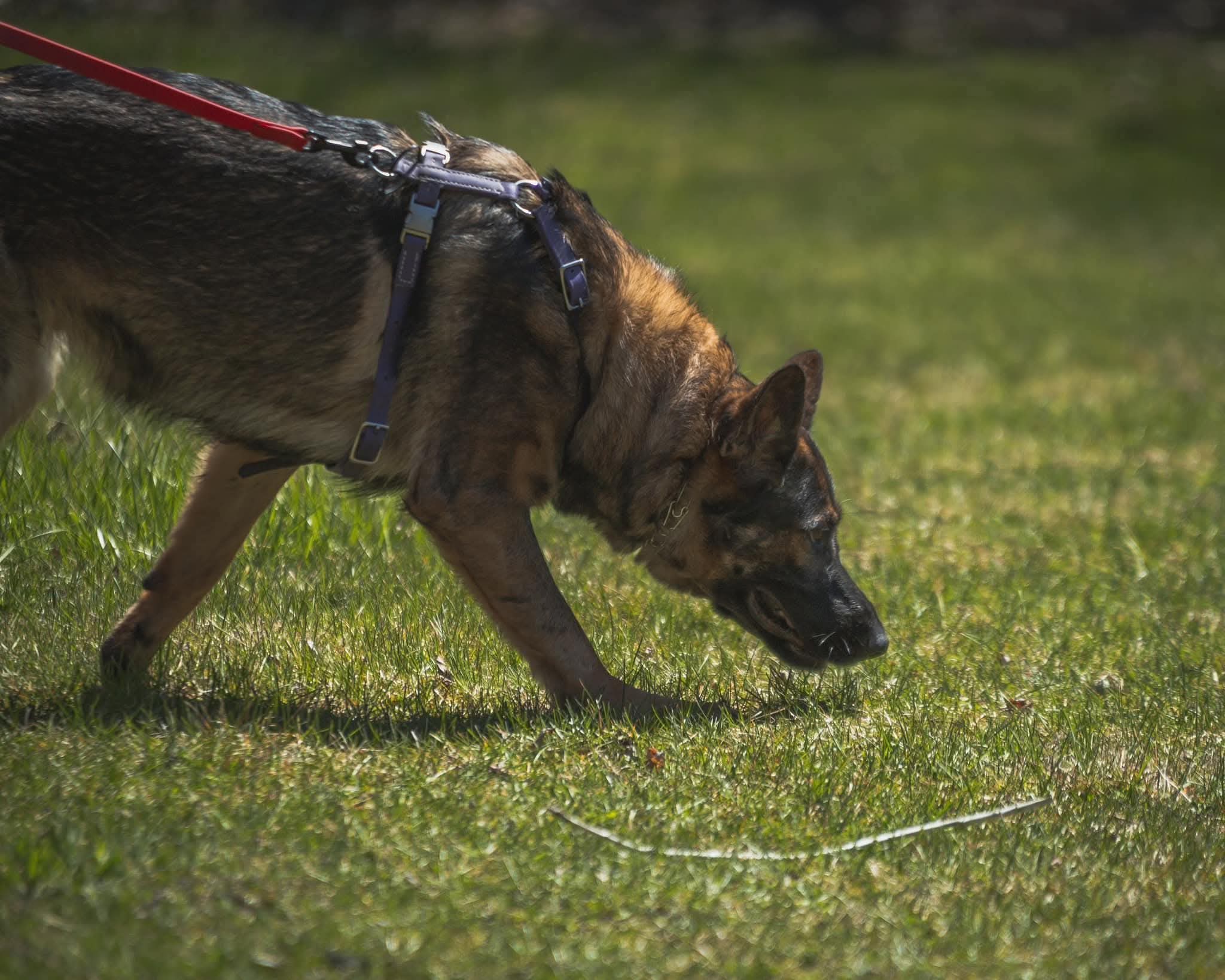
A trainer can have a confident voice, an impressive dog and a wall of certificates. You still need to know what will happen when YOUR dog struggles.
Who will notice that the exercise is too difficult? Who will explain the next step? Will you leave knowing what to practise, or feeling that everything would work if only you were more like the person holding the lead?
Choosing a trainer is a decision about someone you are trusting with your dog, your time and your money. You are allowed to ask detailed questions.
A good training service should help your dog learn useful skills and help you become more capable of teaching, managing and advocating for them in everyday life.
Here is how to look beyond the sales conversation and work out what you are actually buying.
Start with the life you need help living
Before contacting anyone, write down three situations you want to improve. Be specific.
“Better manners” could mean waiting while you open the vehicle, walking past another dog with room to spare, or settling while someone visits. “Reactivity” might describe barking at dogs across the street, lunging at visitors or panicking near traffic. Those descriptions should lead to different questions.
Include your practical constraints: who handles the dog, mobility limitations, children, other animals, available practice time and the places you actually walk. Tell the trainer about previous work, equipment and any incidents involving teeth. Describe what happened plainly.
Do not recreate an incident to make a video. Existing footage or a careful written account can begin the conversation safely.
Your initial brief might be: “Our adolescent dog pulls towards dogs. We need to walk safely on a narrow pavement. My partner has limited grip strength, and we can manage short practice sessions.” That gives a professional something useful to assess.
Check whether you need a trainer, a behaviour specialist or a veterinary team
A trainer may be an excellent fit for everyday skills, owner handling or a particular sport. More complex concerns require relevant behaviour experience and sometimes coordinated veterinary care.
The word “behaviourist” by itself does not establish a particular qualification. A board-certified veterinary behaviourist with the designation DACVB is a veterinarian with specialist training and certification in behaviour. VCA Canada explains the different professional roles and why they may work together.
If behaviour changes suddenly, or you suspect discomfort, contact your veterinarian. AAHA identifies aggression, growing fear, distress when alone, repetitive behaviours and significant activity or toileting changes among concerns that warrant veterinary assessment. Its behaviour-assessment guidance helps explain why an obedience package may be an incomplete response.
Ask the trainer: “What would make you refer us, and how would you work with our veterinarian?” A useful answer includes actual limits to their service.
If anyone feels unsafe, say so before booking. Ask for appropriate interim management advice while arranging professional assessment. Do not wait for the first class to disclose a bite history.
Read the credential, then check who awarded it
For a Canadian owner, letters after a trainer’s name are a starting point. They need translating.
A professional association membership, completion of a school’s course and independent assessment are different things. Ask what the person completed, what was examined, whether practical teaching was assessed and how you can verify their current standing.
For example, CCPDT’s published requirements distinguish CPDT-KA, which includes documented experience and a knowledge examination, from CPDT-KSA, which requires a current CPDT-KA and assessment of practical training and instruction through recorded exercises. Both require recertification.
The IAABC’s credential descriptions distinguish its Accredited Dog Trainer credential from Certified Dog Behavior Consultant. Its assessment process evaluates professional knowledge and judgement through written material, including cases and scenarios. Check the actual designation rather than treating every association logo as the same qualification.
Use the awarding organisation’s directory, such as the CCPDT directory or IAABC consultant locator. If you cannot confirm a claim, ask the organisation.
The Canadian Association of Professional Dog Trainers also provides a Canadian trainer directory. It welcomes professionals at different career stages, so investigate the individual’s background and service.
These are examples, not a complete list of worthwhile education. Ask what the trainer has learned recently and how it changed their work. Then watch them teach.
Match experience to your actual dog and problem
“Twenty years with dogs” leaves a lot unanswered. What were those dogs doing? Which problems did that person work on? Were they teaching owners or primarily handling dogs themselves?
A successful competition handler may be an excellent instructor. Ask how they help an ordinary household with limited time. A skilled puppy instructor may be exactly right for foundations and may refer complex aggression elsewhere.
For a working or sporting breed, ask about relevant experience and appropriate outlets. How would the trainer develop engagement, steadiness and useful work while helping the dog settle at home? A breed label should begin a conversation, not produce an automatic prescription for harder exercise or harsher handling.
Ask for an anonymised example similar to your situation: what was the starting point, what changed and what remained difficult? A thoughtful description of limitations tells you more than another perfect demonstration.
Client references can help. With the client’s permission, ask whether they understood the homework, received useful support when progress stalled and could use the skills after lessons ended.
Ask what happens when the dog gets it wrong
This question cuts through vague marketing language: “If my dog cannot do what you ask, what happens next?”
Listen for an explanation of the setup, the dog’s understanding, the reward, the environment and the next achievable step. Ask the trainer to describe an ordinary example.
“We use whatever works” does not tell you what your dog will experience. Neither does a reassuring label without a clear description of the actual methods.
Be specific about equipment. What will be fitted? How will it be introduced? What action will the trainer take with it? What risks or signs of distress will they watch for? What alternatives are available?
Training methods have welfare consequences. The American Veterinary Society of Animal Behavior’s current position recommends reward-based training and warns against aversive methods because of risks to welfare and the relationship between dogs and people. A trainer should discuss evidence and risks openly.
Clear boundaries and ambitious goals still need thoughtful teaching. Your dog’s strength, breed or enthusiasm does not remove the need to explain how a method works and whether it is appropriate.
You should understand and agree to the plan before work begins. Surprise equipment changes or an unexplained “correction” during a demonstration are reasons to stop and reassess the service.
Watch the difficult minute in a lesson
Ask to observe suitable teaching before committing, with the other client’s permission. A professional should protect client privacy; an alternative demonstration or clearly explained observation arrangement may be necessary.
Watch what happens when the dog turns away, becomes distracted or needs more room. Does the instructor notice? Do they adjust promptly? Can they explain what they saw without labelling the dog manipulative or the owner weak?
Dogs Trust’s body-language guidance describes signs including tension, freezing, avoidance and attempts to move away. Interpret the whole dog in context. Stillness alone does not establish that a dog is comfortable.
Also watch the person learning. Are they given time to try again? Can they ask a question without being embarrassed? Does the instructor notice when several instructions at once have become confusing?
A slick video usually ends where its creator chooses. Ask what happened before the filmed improvement and whether it continued afterwards. You are buying support through the awkward parts too.
Your dog does not owe the trainer a greeting
A sensible goal may be walking politely past people and dogs, working with you, and enjoying a life with a small social circle.
Say that during the assessment. If the proposed solution to every difficulty is compulsory interaction, ask how that fits your dog’s needs.
You can say, “Please give us room,” “Do not touch my dog,” or “We are stopping this exercise.” You can move aside or leave a setup that is unsuitable. You do not need to earn permission by proving that your dog is distressed enough.
Your voice is the only voice your dog has. Do not be afraid to use it.
A trainer worth working with should help you use that voice clearly. Our article Your Dog Does Not Need to Be a Social Butterfly explains why polite coexistence is a perfectly reasonable goal.
Find out how the learning reaches your real environment
A dog performing for a skilled trainer in a familiar room is one part of the picture. Ask how you will practise together where the difficulty actually occurs.
That might involve beginning in a quiet area, rehearsing your handling and then working at a manageable distance from everyday distractions. It should include a plan for an unexpected dog, a narrow exit or a situation that becomes too busy.
“Real life” does not require staging a confrontation or using unsuspecting pedestrians and dogs as training props. Ask how the trainer arranges appropriate practice, protects everyone involved and decides when to increase the challenge.
For Canadians booking through winter, ask about safe footing, daylight, cold and rescheduling. If all lessons move indoors, how will outdoor skills be supported when conditions permit?
Rural owners may need travel appointments or live remote coaching. Ask what the trainer can observe remotely, what camera arrangement is useful and when local assistance is necessary. Our comparison of online training and hiring a trainer examines these formats in detail.
The trainer needs to be able to teach YOU
Ask to practise during the appointment. You need feedback on your timing, positioning and decisions while someone can still help.
A useful instructor can break an exercise into smaller parts, demonstrate, let you try and explain one adjustment at a time. They should ask whether the instruction is workable for your body and your household.
If you cannot crouch, move quickly or hold several items, say so. If written instructions are easier than a rapid explanation, ask for them. If two adults use different cues, include both in the plan where possible.
Before leaving, try explaining the homework back: where you will practise, what you will ask, what earns a reward and what you will do if it becomes difficult. Anything unclear needs another explanation.
“Be more confident” is inadequate homework unless the trainer can translate it into something you can actually do.
Expect the service to change with the dog’s life stage
For a puppy, ask how teaching accounts for short attention, rest, toilet needs and appropriate exposure. Our guide to choosing a puppy class examines the room, supervision and class structure.
For an adolescent, ask how the trainer adjusts freedom and difficulty while rebuilding reliable responses. For an adult with an uncertain history, ask how they gather information without manufacturing a frightening “test.”
For a senior, ask about flooring, rest breaks, hearing or vision limitations and adapting familiar cues. If discomfort or a health change is suspected, the veterinary team needs to assess it. The lesson should fit the dog’s current abilities.
A comfortable standing pause may serve your daily goal better than repeated sits. Explain what you need the dog to accomplish, then discuss an appropriate way to teach it.
Read what you are paying for
Request a written breakdown before paying for a package. Compare the actual service:
- People and time: who teaches, session length, individual coaching time and whether an assistant or substitute may take over.
- Total cost: currency, applicable taxes, travel, equipment, facility charges and any required additional appointments.
- Access: location, accessibility, household participation and the arrangements for a dog who needs space.
- Between lessons: written plans, video review, permitted contact, response times and the date support ends.
- Changes: cancellation, illness, weather, missed classes, package expiry, withdrawal and refund terms.
Ask about current insurance for the services offered, including care of your dog if you will be absent. Request evidence of coverage rather than relying on a website badge. Insurance is one practical check; you still need to assess the teaching and supervision.
Ask who responds to an injury, escape or other emergency, how you are contacted and which veterinary arrangements apply. Check how consent for recordings and promotional use of your dog’s image is handled.
A directory listing or discount can help you find a provider. It does not answer these questions for you.
If your dog stays with the trainer, ask about the entire day
Day training and board-and-train involve more than the advertised lesson time. Ask who handles your dog, where they rest, how they are housed and exercised, and who supervises outside training hours.
What happens if your dog will not eat, cannot settle or struggles with confinement? How are prescribed medications and dietary needs managed? Can you see the relevant accommodation and receive meaningful updates?
Ask how methods and equipment are documented while you are absent, and how changes are agreed. Establish what happens if you want the programme stopped.
The return-home plan matters enormously. How many transfer lessons involve you? Where do they happen? What support is available when the dog encounters your visitors, walks and routines again?
A handover that amounts to collecting a dog and a list of commands leaves too many practical questions unanswered.
Agree on progress you can actually observe
“A completely different dog” is difficult to measure. Choose a small number of useful outcomes and record the conditions.
For example: “On our quieter route, we can turn away together when another dog appears across the road.” Note the distance, handler, equipment and support needed. That provides a more honest comparison than simply counting whether barking happened.
Ask when you will review progress and what would trigger a change in plan, further assessment or referral. The CCPDT’s current professional standards, for example, require its certificants to communicate plans and goals, assess outcomes and adjust work using progress and owner feedback.
Be cautious about guarantees of a permanent behavioural result by a fixed date. Read what a “lifetime guarantee” actually provides: additional sessions, eligibility conditions, ongoing charges or something else.
If the plan is not working, an honest conversation should examine the exercises, environment, health considerations and what the household can sustain. You should be able to report difficulty without being shamed.
Keep these ten questions beside you when you call
- What experience do you have with dogs and households facing this specific difficulty?
- What qualifications do you hold, and where can I verify them?
- What happens when my dog cannot complete an exercise?
- What methods and equipment might you use, and how will we agree to them?
- Can I observe suitable teaching, and will you coach me during lessons?
- How will we practise safely in the places where we need these skills?
- What would make you stop, change the plan or involve a veterinarian?
- Who is responsible for my dog, and what insurance and emergency arrangements apply?
- What exactly does the price include, and what happens if we withdraw?
- How will we measure progress, and what support continues between and after lessons?
Write down the answers. If a promise matters to your decision, ask for it in writing.
Choose someone you can question
You do not need to know everything about dog training before seeking help. Explaining the work is part of the service you are paying for.
Look for someone who notices your dog, listens to your circumstances, teaches clearly and can explain both their plan and its limits. Someone who helps you make responsible decisions when nobody is standing beside you with a clipboard.
You can respect a professional’s experience and still stop an exercise. You can ask another question. You can choose another trainer.
Start your shortlist in the Paw Rewards dog trainer directory, then use these questions to assess each provider. For more practical guidance through every life stage, explore Life With Your Dog.
Start Your Next Adventure
Love discovering dog-friendly places like this?
Join Paw Rewards and use our Pawtastic Vacation Planner to plan your next trip, discover dog-friendly destinations across Canada, track your adventures, compete in challenges, and earn Treats for every walk and every memory you create together.
Redeem your Treats for rewards including Puppy Packs, PAWS Magazine subscriptions, Big Country Raw products, Seasonal Boxes, and exclusive offers from our amazing partners.
Because every adventure deserves a reward.
Keep exploring
Everything you need — from finding your next dog to caring for the one already at your feet.
Comments (0)
Loading comments…