Breed Spotlight · The PAW Library
The Golden Retriever
Canada's beloved family companion
Few breeds carry the Canadian dog-owner imagination quite like the Golden Retriever — patient with children, eager in the field, gentle in the living room, and brilliant in every form of work we ask of them. Bred originally to retrieve waterfowl across the Scottish moors, the modern Golden remains a working dog at heart wrapped in a famously soft, biddable temperament.
Group
Sporting
Energy
High · Outdoorsy
Breed Spotlight
The Golden Retriever
Canada's beloved family companion
Few breeds carry the Canadian dog-owner imagination quite like the Golden Retriever — patient with children, eager in the field, gentle in the living room, and brilliant in every form of work we ask of them. Bred originally to retrieve waterfowl across the Scottish moors, the modern Golden remains a working dog at heart wrapped in a famously soft, biddable temperament.
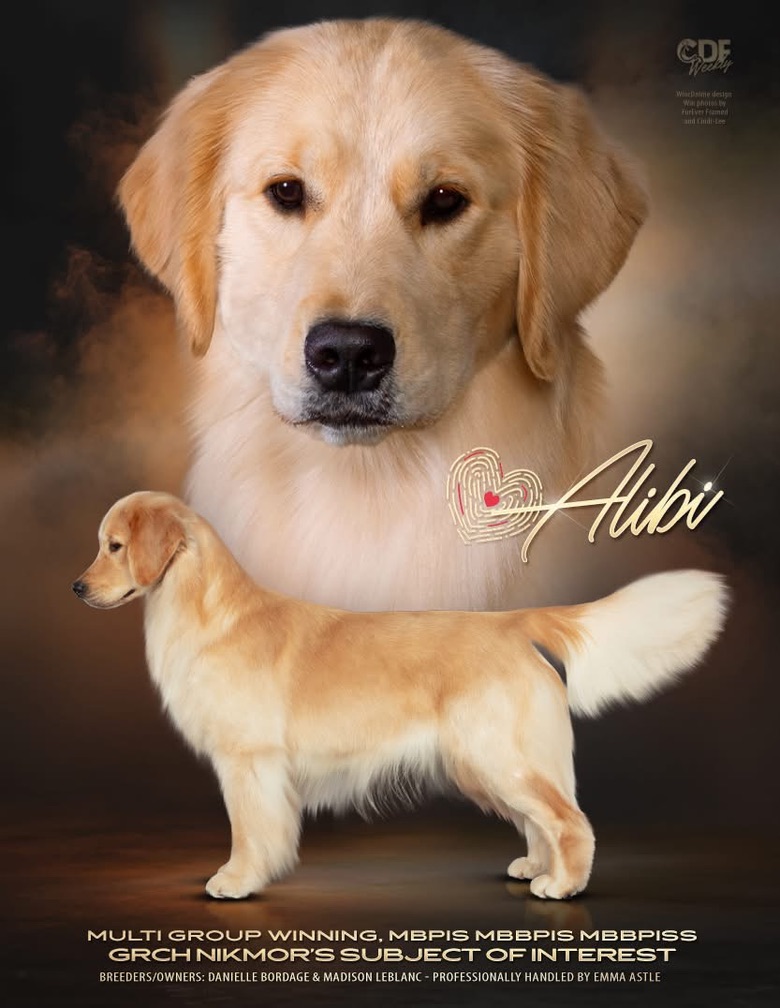
Cover: MULTI GROUP WINNING, MBPIS MBBPIS MBBPISS GRCH Nikmor's Subject of Interest — Bred & owned by Danielle Bordage & Madison LeBlanc · Handled by Emma Astle
Plan Your Next Adventure with Paw Rewards
Ready to turn inspiration into your next unforgettable adventure?
With Paw Rewards, you can do far more than simply discover dog-friendly destinations—you can plan your entire journey.
Use our Pawtastic Vacation Planner to uncover dog-friendly hotels, parks, beaches, cafés, attractions, and hidden gems across Canada, then save your favourite destinations and build your perfect itinerary for you and your dog.
But the adventure doesn't stop there.
Every walk, every road trip, every hiking trail, and every memory you create can help you earn rewards.
Track your adventures, participate in seasonal challenges, compete with friends and fellow dog lovers, and collect Treats throughout your journeys. Your adventures can then be redeemed for incredible rewards including:
- 🐾 Puppy Packs
- 🐾 Annual subscriptions to PAWS Magazine
- 🐾 Products from Big Country Raw
- 🐾 Seasonal Gift Boxes
- 🐾 Exclusive partner offers and prizes from our amazing partners
Because every adventure should be celebrated.
Group
Sporting
Origin
Scottish Highlands, 1860s
Lifespan
10 – 12 years
Energy
High · Outdoorsy
Weight
55 – 75 lbs
Best for
Active families, sport homes, service work
History
The Golden Retriever was developed in the late 1860s by Dudley Marjoribanks (Lord Tweedmouth) at his estate Guisachan in the Scottish Highlands. His meticulous breeding records — preserved to this day — show a deliberate program crossing a yellow Retriever (Nous) with a now-extinct Tweed Water Spaniel, with later, careful introductions of the Irish Setter, Bloodhound, and additional Tweed Water Spaniel lines.
Tweedmouth's goal was a dog suited to the Scottish climate and terrain: powerful enough to retrieve from cold lochs and dense cover, calm enough to live in the home, and trainable enough to work all day. The Kennel Club (UK) recognized the breed as 'Retriever — Yellow or Golden' in 1913, and as 'Retriever (Golden)' in 1920. The Canadian Kennel Club has championed the breed for over a century, and Goldens remain one of the most registered breeds in Canada year after year.
Health & Responsible Breeding
Goldens are generally robust, but the breed carries well-documented predispositions that every responsible Canadian breeder screens for. Hips and elbows should be evaluated by OFA, PennHIP, or the OVC/CHEAP scheme. Eyes should be cleared annually by a veterinary ophthalmologist (CAER/OFA Eye). Cardiac evaluation (preferably echo by a cardiologist) screens for subvalvular aortic stenosis.
Cancer rates in the breed are a serious and ongoing conversation. Programs like the Morris Animal Foundation's Golden Retriever Lifetime Study are producing the data the breed needs, and the best Canadian breeders are open about pedigrees, longevity in their lines, and what they are actively selecting for.
Ask any breeder you are speaking with for the full panel of clearances on both parents — a reputable breeder will offer them before you have to ask.
Nutrition
Goldens thrive on fresh, minimally processed Canadian diets. Raw, gently cooked, and dehydrated raw formats from Canadian makers like Big Country Raw, The Crumps' Naturals, and Tilted Barn fit the breed well — supporting coat condition, lean body composition, and joint health across a long working life.
Puppies grow steadily rather than explosively; keep them lean. For adults, watch body condition closely — a slightly leaner Golden lives a healthier life and protects the hips, elbows, and cruciate ligaments. On-the-go training treats: Hurraw and Smack are great single-ingredient picks; Crumps' freeze-dried liver is a long-standing favourite.
Always discuss any dietary change with your breeder and your vet, and reach for whole-food toppers (sardines, eggs, organ rotation) before reaching for supplements.
Temperament & Traits
Confident without being pushy, soft without being fragile, the Golden is built to work in partnership with people. Expect a dog that wants a job — retrieving, scent work, dock diving, obedience, agility, field, therapy, service. A Golden without a job will invent one (and you may not love their choice).
Socially they are famously open with people and other dogs, but a well-bred Golden still has discernment — they are not 'every dog is my best friend' clowns by default. Early, positive exposure between 8 and 16 weeks shapes the adult dog you'll live with for the next decade.
Coat, Grooming & Climate
The double coat — water-repellent topcoat over a dense undercoat — is built for Canadian winters and Canadian lakes. Plan on a thorough brush 2–3x per week, more during the spring and fall coat blows. Bathing every 4–6 weeks (or after muddy adventures) is plenty for most pet homes.
Goldens love water, snow, and cold. They tolerate heat poorly — schedule summer adventures for early morning and evening, carry water, and learn the early signs of heat stress.
Pros
- Famously gentle with children and other pets when raised well
- Highly trainable — excels in obedience, service, and sport
- Built for the Canadian climate — loves snow, water, and the outdoors
- Long history of well-documented health testing in reputable lines
- Adaptable to city or country life with daily exercise and engagement
Things to consider
- Heavy shedders year-round, with two intense coat blows annually
- Need real daily exercise and mental work — not couch dogs
- Breed-wide cancer concerns make breeder selection critical
- Slow to mature — expect a 'big puppy' until 3 years old
- Highly social — not a great fit for homes that are empty 10+ hours/day
More Golden Retriever breeders on PAW Privileges
Additional Canadian breeders raising this breed on our platform.
Start Your Next Adventure
Love discovering dog-friendly places like this?
Join Paw Rewards and use our Pawtastic Vacation Planner to plan your next trip, discover dog-friendly destinations across Canada, track your adventures, compete in challenges, and earn Treats for every walk and every memory you create together.
Redeem your Treats for rewards including Puppy Packs, PAWS Magazine subscriptions, Big Country Raw products, Seasonal Boxes, and exclusive offers from our amazing partners.
Because every adventure deserves a reward.
Comments (0)
Loading comments…