September 27, 2026 · Angelique
How Much Exercise Does Your Dog Need? Age, Breed and Lifestyle Explained
Build a practical exercise routine for puppies, adults and senior dogs, with breed considerations, sample schedules, recovery checks and Canadian weather advice.
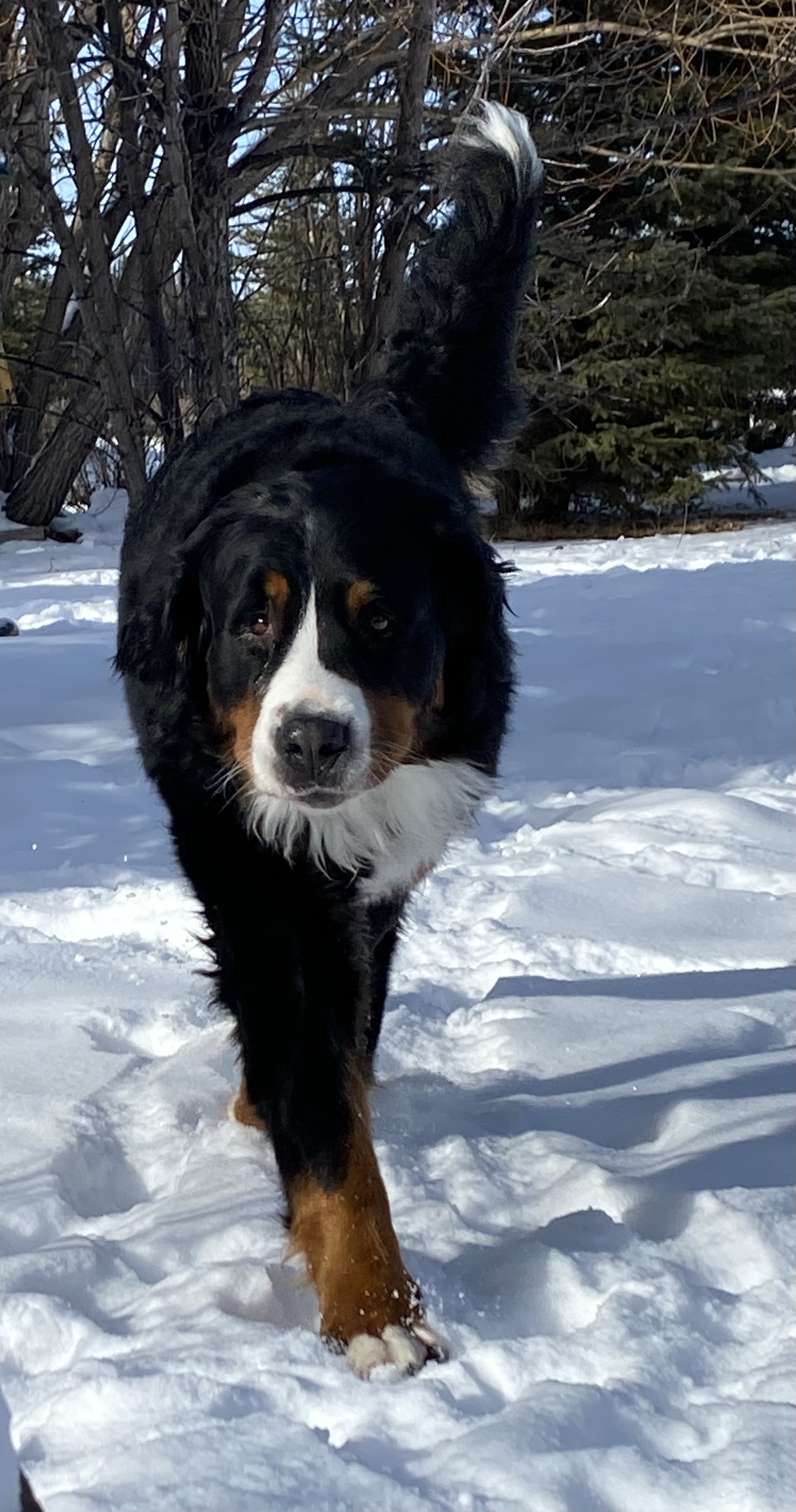
How much exercise does a dog need? It sounds like a question that should have a simple answer: a certain number of minutes, two walks a day, or a distance based on breed.
But a young puppy exploring the yard, a fit adult Border Collie training with their owner, and a senior dog enjoying a familiar path are doing very different things. Their exercise plans should reflect that.
A useful routine considers age, health, fitness, breed tendencies, personality and the conditions outside. It also makes room for sniffing, learning, play and rest. The aim is a dog whose needs are met—not a dog pushed to exhaustion.
This guide helps Canadian owners build that routine, recognize when it needs adjusting and make everyday activity fit real life.
Start with the dog, then decide on the minutes
A time target can help you organize your day, but it cannot tell you whether a particular activity is suitable. Thirty minutes of relaxed sniffing is a different demand from thirty minutes of continuous running, repeated ball chasing or climbing through deep snow.
Before adding exercise, consider five questions:
What can my dog comfortably do now?
Are they still growing, recovering from illness or managing a health condition?
What does the activity involve: pace, terrain, impact and excitement?
How do they move and recover afterward?
Can our household provide this routine consistently?
PDSA’s exercise guidance emphasizes tailoring activity to the individual dog, including age and health. If your dog has medical restrictions or struggles with ordinary activity, ask your veterinarian for a specific plan before increasing the workload.
Exercise by life stage
Puppies: discovery and short activities
Build the day around manageable exploration, suitable play, early learning and plenty of opportunities to rest. Your puppy is developing, not training for your next long-distance adventure.
Planning question: can we finish this activity while the puppy is still comfortable, with an easy route home?
Adolescents: consistency and skills
Keep the plan appropriate to physical development and current fitness. Include practical skills such as checking in with you, walking on a lead and disengaging from distractions.
Planning question: does the schedule offer both activity and opportunities to settle?
Adults: maintain a sustainable routine
Use a mix of suitable movement, exploration and activities your dog enjoys. Develop fitness gradually before expecting substantially longer or harder outings.
Planning question: does the weekend plan match what this dog is conditioned to do during the week?
Seniors: preserve comfortable participation
Adapt the pace, surface, route and duration to your dog’s current needs. Familiar outings and enjoyable exploration can remain part of life, even when the format changes.
Planning question: what adjustment would let my dog participate comfortably today?
How much exercise should a puppy get?
You may have heard the rule of five minutes of exercise per month of age. PDSA’s dedicated puppy-exercise guidance says there is no scientific evidence behind that rule and that it is not appropriate for most puppies. It should not be treated as a medical limit or a target every puppy must reach.
Instead, consider the type of activity, your puppy’s development and their response. Short walks, appropriate play and training can all contribute. Build walking stamina gradually, allow rest and account for the return journey. Read PDSA’s puppy-exercise guidance.
For public outings, ask your veterinarian which environments are appropriate while your puppy’s vaccination course is underway. Exercise planning and infection-risk management need to work together.
Do not use a lively puppy’s enthusiasm as the only measure of readiness for sustained running, repeated jumping or demanding sport. Discuss the intended activity and your dog’s development with your veterinarian and a suitably qualified instructor.
Make the logistics easy: a short route, a place to pause and a way to get home if the puppy needs to stop. An out-and-back walk is not finished when you reach the turnaround point.
Breed matters, but it does not write the whole schedule
Breed research helps you understand likely interests and the commitment you are considering. It does not replace observing your individual dog.
Dogs Trust’s Border Collie guidance, for example, highlights that age, health and personality affect the exercise plan. Even within an active breed, a growing dog, a fit adult and an older dog need different arrangements.
For working breeds, ask what the dog is being given to do, as well as how far they travel. A household might explore structured obedience, searching, retrieving or an appropriate dog sport with knowledgeable guidance. Match the task to the dog’s abilities and your handling experience.
A Border Collie, German Shepherd or Belgian Malinois should not be assigned an escalating distance target simply because they are enthusiastic. If you are interested in advanced working activities, find an instructor with relevant experience and a clear progression plan.
Likewise, a small dog still needs an individual activity plan. Being easy to carry does not tell you how much exploration or movement they enjoy.
Before choosing a dog, use Breed Wise to begin exploring fit. Be honest about an ordinary Tuesday, not just the adventurous weekends you hope to have.
Build variety into the day
Rather than judging the entire routine by walking distance, make space for different experiences.
Movement
Choose routes and activities that fit your dog’s current condition. Record terrain and pace alongside duration when you are adjusting the plan. An easy pavement loop and a rough trail should not be treated as interchangeable because the kilometre count matches.
Sniffing and exploration
Leave room for your dog to investigate appropriate surroundings. A walk does not need to be a continuous march to be worthwhile.
Learning and play
Use manageable tasks your dog enjoys. A simple search for suitable food, a toy game with pauses or a short training session can add variety. Supervise new enrichment items and choose materials your dog will not swallow.
Dogs Trust offers enrichment ideas, including food activities and scent-based games. These provide different experiences; they should not be converted into a claimed number of equivalent walking minutes.
Rest
Leave genuine downtime in the schedule. If every quiet moment becomes another invitation to play, it becomes difficult to assess what your dog does when activity is actually finished.
A practical household rule is to put equipment away at the end of a session and provide a comfortable place to rest. If your dog consistently cannot settle, review the whole day with an appropriate professional instead of automatically adding more exercise.
Sample routines: structures to adapt
The examples below organize a day. They are not exercise prescriptions or minimum requirements. Choose the duration and intensity according to your dog’s needs and any veterinary advice.
A young puppy’s day
Morning: a toilet opportunity, meal and brief supervised exploration.
During the day: repeat care, suitable play or learning, and rest according to the puppy’s needs.
Evening: a manageable familiar activity, a quiet settling period and the usual bedtime routine.
Adjust for: development, vaccination advice, supervision and the puppy’s ability to cope.
A healthy adult’s workday
Morning: an appropriate outing with time to explore.
Midday: a toilet opportunity and care suited to the dog’s needs, arranged with a caregiver if necessary.
Evening: another suitable outing, play or a focused activity, followed by rest.
Adjust for: current fitness, the owner’s schedule, weather and how the dog recovers.
A senior dog’s day
Morning: a comfortable outing on a manageable surface.
During the day: additional short opportunities as appropriate, plus accessible enrichment and rest.
Evening: familiar activity at the dog’s pace and a check for any change in comfort.
Adjust for: the veterinary plan, mobility, sensory changes and recovery afterward.
If your schedule cannot provide the necessary care, research help through the Paw Rewards directory. Tell a walker about your dog’s actual needs rather than booking a distance or group outing by default.
Senior dogs and dogs with arthritis
Slowing down deserves attention. Do not assume every change is simply age, and do not try to solve discomfort by pushing through a longer walk.
VCA Canada identifies controlled, regular exercise as part of osteoarthritis management alongside other care. It describes starting with shorter, frequent walks and adjusting according to stiffness and the dog’s response. A rehabilitation professional can help develop a suitable program. Read VCA Canada’s exercise guidance for osteoarthritis.
Ask your veterinarian what to monitor during activity, later that day and the next morning. Describe specific observations: difficulty rising, a change in gait or reluctance on a particular surface.
You can also change the outing without giving it up entirely: choose a closer destination, reduce time spent travelling on foot, or visit a familiar place where your dog can explore at a comfortable pace.
For help with the next step, review the wider care checklist as your dog grows older.
Canadian weather changes the plan
Heat and humidity
Adjust or cancel strenuous activity when conditions are unsuitable. An earlier start may help on some days, but the clock alone does not establish safety.
The Royal Veterinary College advises stopping exercise, seeking shade, cooling with water and obtaining veterinary advice if a dog pants excessively, has difficulty breathing or becomes unwilling or unable to continue in warm conditions. Suspected heatstroke requires urgent veterinary attention; begin cooling while arranging help. Read the RVC’s heat-illness guidance.
Do not keep moving to finish a route or preserve an activity streak. Plan exits and transport options before an ambitious outing.
Cold, ice and road salt
The Ontario SPCA recommends adapting walks in severe cold and watching for signs such as shivering or lifting paws. Suitable coats or boots may help some dogs, and cleaning paws after outings helps remove salt and de-icing residue. Read its winter-walking advice.
Consider footing as well as temperature. A familiar route can become a different task when it is icy or covered in deep snow.
Bad-weather alternatives
Keep an indoor plan ready: suitable search games, brief training, supervised enrichment and quiet time. Manage necessary toilet trips safely. There is no requirement to make every day look identical when conditions change.
Watch recovery, not just enthusiasm
Keep a simple activity note when you are changing a routine. Record the activity, surface, weather and what you noticed afterward. Share persistent or concerning changes with your veterinarian.
Stop and reassess if your dog is limping, repeatedly falling behind, reluctant to continue or moving differently. Severe breathing difficulty or collapse needs urgent veterinary help.
Restlessness at home also needs context. Review supervision, opportunities to explore, household noise, sleep and signs of discomfort. “Needs more exercise” is a possibility to examine, not a diagnosis.
If the difficulty is fear of traffic, other dogs or busy places, choose a more manageable environment while you get support. Our guide to choosing a dog trainer in Canada can help you identify appropriate assistance.
Make a realistic plan for the next week
Write down the routine your dog currently handles comfortably.
Mark the days when work or family commitments create a care gap.
Choose a suitable mix of movement, exploration, learning and rest.
Plan an easier alternative for unsuitable weather.
If you are increasing activity, make changes gradually and observe the response.
Review what worked before adding further demands.
Keep the plan useful to the people who provide care. A clear note such as “use the quiet route and allow sniffing” communicates more than “tire the dog out.”
Common exercise questions
Does a yard replace walks?
A yard can be useful for suitable play and exploration, but having access to it does not tell you how your dog spends that time. Review what the dog actually does and what experiences the rest of the routine provides.
Does my dog need the dog park?
No specific venue is compulsory. Choose activities and settings that suit your dog. A quieter route or individual activity may fit better than group play.
Can a weekend hike make up for a quiet week?
Do not assume a large one-day increase is appropriate. Plan outings around existing fitness and build toward more demanding activities gradually.
How many minutes should I aim for?
Use your dog’s current comfortable routine as the starting point. Age, health, activity type and conditions determine whether a proposed duration is suitable. Ask your veterinarian for individual guidance when the answer is unclear.
Enjoy progress at your dog’s pace
Paw Rewards gives you a place to record everyday adventures and join community activities. Let a challenge support a suitable routine rather than dictate how far your dog must go.
Download the free app on Apple or Google Play. For the broader picture of daily care, explore The Complete Guide to Dog Ownership in Canada.
For the wider picture, explore Life With Your Dog, from puppyhood to the senior years.
Start Your Next Adventure
Love discovering dog-friendly places like this?
Join Paw Rewards and use our Pawtastic Vacation Planner to plan your next trip, discover dog-friendly destinations across Canada, track your adventures, compete in challenges, and earn Treats for every walk and every memory you create together.
Redeem your Treats for rewards including Puppy Packs, PAWS Magazine subscriptions, Big Country Raw products, Seasonal Boxes, and exclusive offers from our amazing partners.
Because every adventure deserves a reward.
Keep exploring
Everything you need — from finding your next dog to caring for the one already at your feet.
Comments (0)
Loading comments…