
October 3, 2026 · Paw Rewards
Feeding Your Puppy: Grains, Raw & Fresh Food, Toppers and Growing Appetites
A puppy parent asked about grains, fresh additions and how much to feed. Here is our raw-and-fresh approach: understand the ingredients, build a balanced bowl, choose useful toppers and adjust the food as your puppy grows.
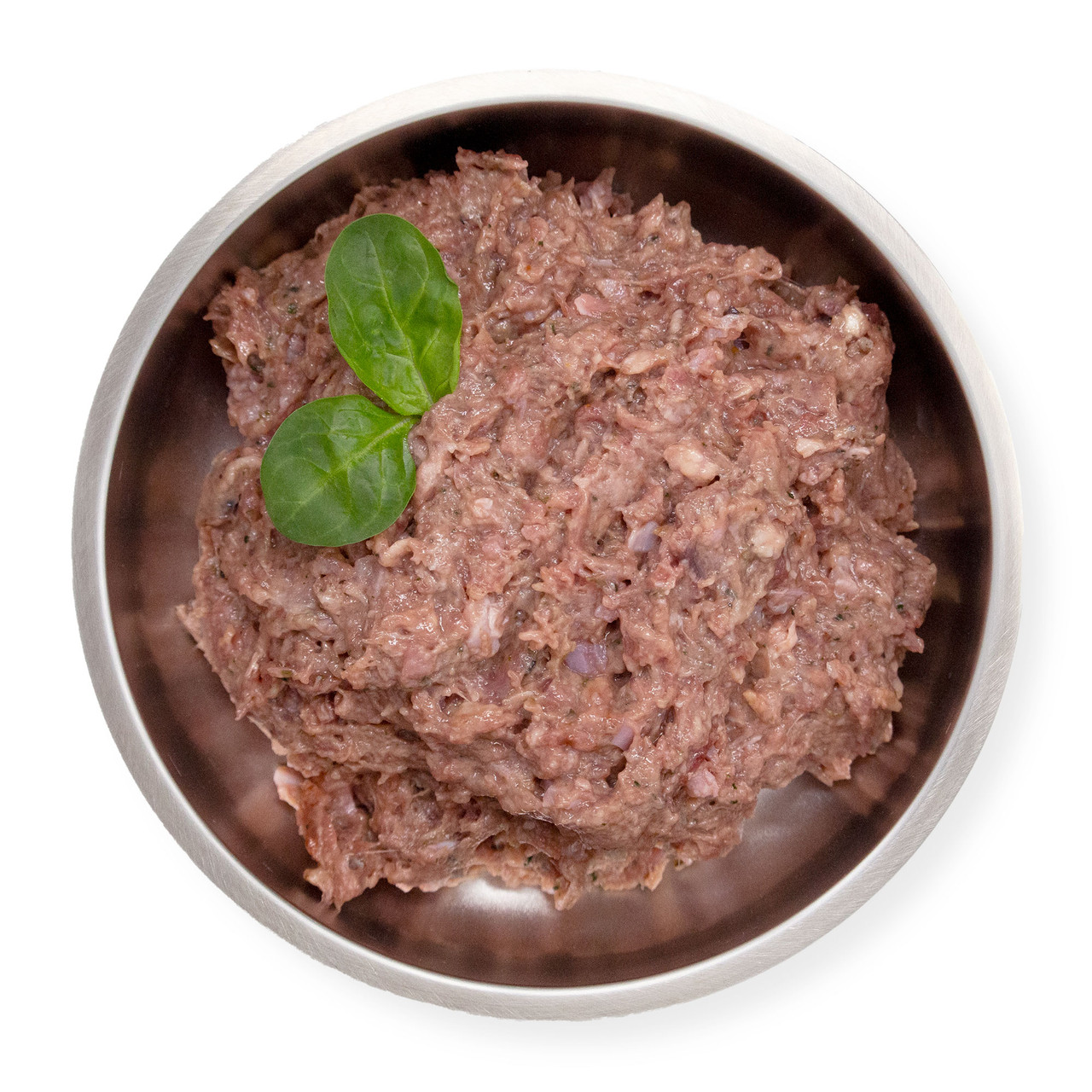
A puppy parent recently asked me about the food they were planning to use for their new girl. We had discussed Hurraw and SMACK, and their plan was to use one as her main food, with raw and other fresh additions mixed in. Their questions were sensible: grain or grain-free? What should they add while she is a puppy? And how should the amount change as she grows?
My answer starts with something I want to make very clear: at Paw Privileges, we are strong proponents of properly balanced raw and fresh feeding. Food is a real passion of mine. I want families to understand what they are feeding, why the ingredients are there and how to give their dogs variety that serves a purpose.
I also know that bringing home a puppy already comes with plenty to learn. You should not need a dictionary beside the food bowl or feel that a good diet requires a freezer full of products and ten different supplements.
For this family, a suitable dehydrated food with carefully chosen fresh additions can be a practical place to start. A complete raw diet is another option, as is a professionally formulated fresh-cooked diet. The aim is to build a feeding routine you can stick to and adjust as your puppy develops.
So let’s answer the question properly, starting with what is actually in the bag.
Hurraw and SMACK: convenient to serve, but not conventional kibble
Although you can scoop them from a bag, Hurraw and SMACK describe their foods as dehydrated raw. Dehydration removes moisture; Hurraw describes a low-temperature process using a partial vacuum. Conventional kibble is commonly made through extrusion, which uses heat, moisture and pressure to cook and shape the food.
These distinctions matter to families who want the convenience of dry food while choosing a different processing approach. They also explain why “dry food” and “kibble” should not be used as though they always mean the same thing.
A fresh-cooked meal has been cooked and retains substantial moisture. A frozen raw meal has not undergone that cooking step. A dehydrated or freeze-dried raw food has had water removed. Fresh, raw and dehydrated describe different things, and I want parents to understand which one they are buying.
Before recommending an amount, I would still ask for the exact recipe. We need its calories, its suitability for growth and its feeding directions. One brand can make several recipes with different nutrient levels. “I am feeding SMACK” does not give us the same information as a photograph of the current recipe label.
Why raw and fresh food deserve a serious place in the conversation
Our preference for raw and fresh feeding should be explained, not reduced to a slogan. I value knowing what goes into the bowl, having choices about processing and using suitable whole foods thoughtfully. I want nutrition discussions to consider those priorities alongside nutrient balance and research.
There is published canine research worth talking about. It is inaccurate to dismiss the entire subject as having no evidence of benefit. It is equally important to explain what a finding means for the owner reading it.
What digestibility studies tell us
Digestibility describes how much of a nutrient is broken down and absorbed rather than passing out in the stool. Researchers often estimate it by comparing what dogs eat with what they excrete. It is a useful measurement, although it does not tell us everything about long-term health.
A 2024 controlled study in ten adult Beagles compared five commercial foods. The frozen raw and one freeze-dried raw recipe had higher apparent protein digestibility than the other diets. The extruded recipe had lower fat digestibility than the raw and fresh foods tested.
Those are concrete advantages for particular foods in that study. The recipes also differed in ingredients and nutrient composition, so the results cannot isolate processing as the only cause. The study was funded by Primal Pet Foods, and one author worked for Primal.
Research is also looking directly at processing
A 2026 study used the same starting formula processed in five ways. In ten adult Beagles, the high-pressure-processed raw and steamed versions performed well on several digestibility measures. All four alternatives had higher protein digestibility than the retorted version, which is the heat treatment used for shelf-stable pouches or cans.
The results were not identical across all nutrients: the freeze-dried version had lower fat digestibility than the others. This study did not include extruded kibble. Its value is showing that processing deserves investigation and that raw, freeze-dried and gently cooked foods should not automatically be treated as nutritionally identical.
What about feeding fresh foods during puppyhood?
The University of Helsinki’s Dog Risk team has studied early feeding and later digestive health. Its 2023 paper found that non-processed meat-based feeding during puppyhood and adolescence was associated with less owner-reported chronic enteropathy later in life. Berries during puppyhood were also associated with less of this condition. Chronic enteropathy means persistent or recurring intestinal illness.
This was observational research using owner questionnaires, rather than a trial assigning puppies to diets. It identifies associations, not proof that a food prevents disease. Recall errors and other differences between households can affect the results.
I find this a worthwhile reason to keep studying early food choices, and it supports taking the fresh-food conversation seriously. It does not establish a universal raw percentage or a promise that one feeding style prevents illness. For the puppy in front of us, we still need a recipe and portions that meet her growth needs.
Grain or grain-free? Look at the ingredients, the amount and the whole recipe
My first response to this parent was, “Not all grains are equal.” That is where I would begin again.
The word grain covers very different ingredients. Whole oats are not the same as isolated oat fibre. Brown rice and white rice are different. Corn starch and whole corn have different nutritional jobs. A label that simply announces “with grains” tells us very little.
Nor does “grain-free” tell us that a food contains more meat or less starch. Taking out rice and replacing it with a large amount of peas, potatoes, or tapioca does not automatically create the type of food I would choose.
I want to know what forms the main part of the recipe, where its protein comes from, what carbohydrate sources are used and whether the food is appropriate for the puppy. The grain claim on the front of the bag is only one piece of that assessment.
Whole grains, refined grains and fibre explained
A whole grain retains its outer bran, its germ and its starchy centre. Refining removes some of those parts. That changes the amount and mixture of fibre, fat and other nutrients. Researchers analyzing ingredients for pet nutrition have documented meaningful differences between grains and their individual fractions. This grain-composition study is useful background.
Fibre is the part of carbohydrate that is not digested in the same way as starch. Some fibre helps with stool bulk; some is used by microbes living in the gut. Soluble fibre can dissolve in water, and certain types form a gel. Insoluble fibre does not dissolve in the same way. Different foods provide different mixtures.
Beta-glucans are one type of soluble fibre found in oats and barley. That explains an ingredient’s potential contribution; it does not mean every oat-containing food delivers the same amount or a specific medical benefit.
Ingredient | What I would want a parent to understand |
|---|---|
Oats | Can supply starch and useful fibre. Oatmeal, oat bran and isolated oat fibre are different ingredients; read the actual name. |
Barley | Provides starch and fibre. How much outer material has been removed changes what the ingredient contributes. |
Brown rice | Retains bran and germ, with more fibre and certain nutrients than polished white rice. |
White rice | A refined starch source with less fibre. Its digestibility can be useful in particular feeding plans, although it is not interchangeable with a whole grain. |
Wheat | Can contribute starch and protein. Tolerance depends on the dog; the name alone does not diagnose a food sensitivity. |
Corn | Has nutritional value, but whole corn, corn starch and corn gluten meal are different. Ask which is used and what role it plays. |
I do not consider every grain an empty filler. Dogs generally digest appropriately prepared grains, as the Tufts nutrition service explains. That does not answer whether I like the overall proportions or processing of a particular food.
For me, a modest, purposeful inclusion of a grain is a different discussion from a recipe in which a large share of the bowl is starch. You cannot determine exact proportions from ingredient order alone, so ask the manufacturer when that information matters to your choice.
What replaced the grain?
Peas, lentils and chickpeas are often called pulses: the dried edible seeds of certain legumes. They supply varying amounts of protein, starch and fibre. Potatoes and tapioca supply starch too, although they are not pulses.
If the label lists peas, pea protein and pea starch separately, consider them together when asking about the formula. This is not a calculation of their combined percentage; it is a reason to request clearer information.
Likewise, the protein percentage on the bag tells you how much crude protein was measured, not how much came from meat or how well the amino-acid supply fits your puppy. Amino acids are the building blocks of protein. A useful food assessment goes beyond one large number on the label.
Where does the grain-free heart-disease discussion fit?
Dilated cardiomyopathy, or DCM, affects the heart’s ability to pump effectively. Diet-associated cases deserve attention, but “grain-free” alone is too broad a category to explain them. Reports have included grain-containing foods as well as grain-free foods, with pulses prominent in many reported formulas.
The published investigation summary describes a complex relationship, not proof that every grain-free food is harmful. It also does not establish that the issue has been disproven. A meat-based raw recipe and a pulse-heavy dry recipe should not be treated as interchangeable because neither contains grain.
For parents, the useful response is to assess the exact food and its nutrient data. Adding rice or an unmeasured taurine supplement is not a demonstrated correction for an unsuitable formula.
Build a complete puppy diet, then decide how to add variety
Raw feeding can provide the main diet. Fresh food does not have to remain a garnish. The important distinction is between a complete meal and an individual ingredient.
“Complete and balanced” means the required nutrients are supplied in appropriate amounts and proportions for the stated life stage. Those words apply to properly formulated raw and fresh diets as well as other food formats. They are not exclusive to kibble.
For a puppy, check for suitability for growth. Under the AAFCO framework, growth and all-life-stages statements include puppy needs; adult maintenance does not establish puppy suitability. For a puppy expected to weigh 70 lb, about 32 kg, or more as an adult, check whether the statement includes growth of large-size dogs. AAFCO explains the label wording.
AAFCO develops nutrient profiles and model rules. It does not personally approve every brand, and an adequacy statement does not settle every question about sourcing, processing or quality. It is useful information about the nutritional job the product is intended to do.
A packet labelled complementary, supplemental or for intermittent feeding is a different product from a complete puppy meal. Boneless meat is another example: it supplies protein and phosphorus but little calcium relative to phosphorus. Meat, organs, fish and other ingredients can all have a place, but a homemade growth diet needs more than an appealing assortment.
If you want to prepare the entire diet yourself, invest in a written, puppy-specific formulation from a properly qualified nutrition professional. It should give ingredient weights, any required supplements, preparation directions and a plan for review as your puppy grows. A generic meat-bone-organ ratio does not establish that every growth requirement has been met.
Can you combine a complete dehydrated food and a complete raw food?
Yes, a mixed approach can be workable when both foods are appropriate for the puppy, the combined intake is suitable and she tolerates it. Decide on the share supplied by each using calories rather than equal-looking scoops.
For example, if an assessed daily allowance were 600 calories and you wanted half from each food, that would mean 300 calories from each. It would not necessarily mean equal weights: moisture makes a substantial difference to the weight and volume needed.
There is no need to make a large switch simply to feel that you are doing enough. Start with a plan you understand, introduce changes thoughtfully and keep a record of how she responds.
The 10% guideline does not mean “only 10% fresh food”
This point is often misunderstood. The common guideline to keep extras to no more than 10% of daily calories is about nutritionally incomplete additions, such as treats, plain meat, egg or fruit. It does not mean a puppy can receive only 10% of her calories from a complete raw or fresh diet.
If the full diet is appropriately formulated for growth, fresh or raw food may supply far more, including the entire diet. If you are adding ingredients to a complete base without reformulating it, keeping those extras modest helps preserve the nutrient balance. The 90/10 feeding guidance addresses that distinction.
On a 600-calorie day, 10% would be 60 calories for all incomplete extras combined. Training treats count too. This is a ceiling rather than a requirement, and it does not make concentrated supplements safe at any amount under that calorie limit.
What I would add to this puppy’s bowl, and why
My favourites include a suitable salmon oil, blueberries, sardines, eggs, pumpkin, small amounts of vegetables and tolerated fermented dairy. I would introduce them gradually and rotate them. You do not need every item at every meal.
Salmon oil: understand EPA and DHA before choosing a bottle
EPA and DHA are two marine omega-3 fatty acids. DHA is involved in normal brain and retinal development; the retina is the light-sensitive tissue at the back of the eye. EPA and DHA also participate in processes involved in inflammation.
There is a good reason to pay attention to these nutrients during puppyhood. Controlled studies, including a 2012 puppy trial and a 2023 DHA-rich fish-oil study, reported benefits in particular learning or developmental measures.
I would look for a quality product that states the amount of EPA and DHA per measured serving and provides information about testing for contaminants and oxidation. Oxidation means the oil has chemically deteriorated; storage and freshness matter.
Do not confuse the amount of total oil with the amount of EPA and DHA. A hypothetical capsule containing 1,000 mg of oil might provide 180 mg EPA and 120 mg DHA: 300 mg combined, not 1,000 mg.
Check what the main food already supplies, then have the appropriate addition calculated for the puppy and the product. A pump is only useful if you know its volume and concentration. Fish oil contributes calories, too. Store it as directed, buy a sensible bottle size and include regular fish meals in the overall assessment. Medical conditions or medications may require a different approach.
Blueberries: a small daily addition I like
I LOVE Blueberries. They contribute fibre and polyphenols, a group of plant compounds that includes anthocyanins, the pigments responsible for their blue-purple colour.
These compounds have antioxidant activity. In simple terms, antioxidants interact with reactive molecules involved in cellular damage. That is more useful to understand than a vague “superfood” label.
A small study in exercising sled dogs found increased post-exercise antioxidant status with blueberry supplementation. It measured that response, rather than disease prevention or lifespan. A handful of berries daily is my practical food preference, not a research-established puppy dose.
Use washed fresh berries or plain frozen berries, softened and mashed or cut if your puppy gulps. Start with a small amount within her allowance for extras. There is no need for sweetened blueberry products, powders or a large serving to make this worthwhile.
Kefir or goat’s milk a couple of times a week
A small amount of plain kefir or goat’s milk can add variety if dairy agrees with your puppy. Kefir is fermented milk: microorganisms have changed components of the milk, and some products contain live cultures.
The gut microbiome is the community of microorganisms living in the digestive tract. Canine studies have found that kefir can alter aspects of this community, although the findings vary by product and study. One small study reported changes in intestinal bacteria, while another controlled study in adult dogs found limited overall effects.
I would use it as a food, without promising that it will cure digestive disease. A fermented product is not automatically equivalent to a probiotic containing identified strains tested at a defined dose.
Choose plain, unsweetened products, introduce a small taste and watch tolerance. Goat’s milk still contains lactose, the natural milk sugar; fermentation does not guarantee that kefir is lactose-free. Products made with pasteurized milk reduce microbial risk while allowing you to offer dairy. Neither milk nor kefir replaces drinking water or a balanced meal.
Sardines: protein and marine omega-3s in a whole food
Sardines are a useful addition because they provide protein as well as EPA and DHA. Plain canned sardines packed in water, with no added salt or seasoning, are easy for families to portion.
Mash a small serving into the food. The softened bones in canned sardines are different from hard fish bones, but still check the texture and remove any firm pieces. Store the remainder according to the package directions.
One tin is not a universal puppy portion. Count the calories and consider regular sardines when deciding how much additional oil is needed. This food guide includes sardines and cooked fish.
Eggs and quail eggs: useful nutrients in a manageable portion
Eggs contribute protein, fats and nutrients including choline, which has roles in cell membranes and normal nervous-system function. Quail eggs are smaller than chicken eggs, making it easier to offer a modest portion, but size does not create a special nutritional exemption.
For families using raw eggs, source and handling matter, and raw eggs are not guaranteed pathogen-free. Plain cooked egg is a lower-risk way to provide these nutrients. There is no need to add butter, oil or seasoning.
A whole chicken egg can use much of a small puppy’s allowance for extras. You can portion it rather than serving the whole thing simply because it came in one shell.
Eggshell is a calcium ingredient, so use it deliberately
The useful question is whether your puppy’s diet needs the calcium. Shell is concentrated calcium; it is not a casual garnish. If a complete raw, fresh or dehydrated diet already meets growth requirements, adding shell may push intake beyond what was intended.
Calcium and phosphorus help build the skeleton, and both their amounts and their balance matter.
Pumpkin: a simple fibre option
Plain cooked pumpkin or canned pure pumpkin supplies fibre and moisture. It can be useful when you want a small, easy-to-serve vegetable addition. Choose pure pumpkin, not sweetened or spiced pie filling.
Fibre changes stool depending on its type, the amount and the rest of the diet. More is not always more helpful. Persistent diarrhea, straining or vomiting needs investigation rather than an increasingly large spoonful of pumpkin. See the preparation guidance for pumpkin and squash.
Broccoli: prepare a little so your puppy can manage it
I like small amounts of broccoli, lightly steamed and finely chopped or mashed. It supplies fibre and plant compounds while adding another flavour and texture.
Keep it plain and modest. Large stalk pieces can be a swallowing problem, and compounds called isothiocyanates in broccoli can irritate the digestive tract in excessive amounts. Introduce a little and watch for gas or loose stool. This veterinary explanation covers portion and preparation cautions.
Apple or unsweetened applesauce
Small apple pieces or a little plain applesauce can provide variety and some fibre. Remove the core and seeds from fresh apple and cut it to suit your puppy.
For applesauce, read the ingredients: plain and unsweetened, with no xylitol. Xylitol is a sweetener that is toxic to dogs. A small addition is plenty; it is part of the food allowance, rather than something to pour over every meal. This fruit-and-vegetable reference provides more preparation guidance.
Getting useful nutrition advice: check the expertise behind the title
“Ask your vet” should not be the entire answer to a detailed feeding question. A family may need someone who can formulate a raw or cooked growth diet, assess a mixed-feeding plan or calculate a specific supplement contribution. That requires relevant expertise and time.
Think of the difference between a general medical appointment and a dedicated consultation with a qualified dietitian. General care and specialist nutrition support have different roles. For your dog, the important step is finding the person with the training and experience needed for the actual question.
A general veterinarian is not automatically a nutrition specialist
Veterinary degrees include nutrition, but the amount, format and emphasis vary between programs.
Your general veterinarian remains important for assessing health, growth and symptoms that may need diagnosis. If you want a detailed feeding plan, ask for dedicated nutrition expertise rather than assuming that either a standard appointment or a food recommendation covers everything.
What does “certified pet nutritionist” actually mean?
Ask who issued the qualification and what it required. The word certified, without that information, does not tell you the level of education, whether clinical cases were supervised or whether the person is trained to formulate puppy diets.
Ask about commercial relationships, including WSAVA
Owners are entitled to ask who funds education and whether the person recommending a product also sells it, consults for its manufacturer or receives referral income.
WSAVA is the World Small Animal Veterinary Association. It has documented industry relationships: for example, its announcement of Royal Canin’s support for the nutrition committee. Those relationships are relevant context when evaluating educational material.
They are not proof that an individual veterinarian is paid or required to recommend a food. WSAVA’s nutrition committee also states that it does not endorse or approve specific products or companies. “WSAVA-approved food” should not be treated as a product certification.
Apply the same scrutiny to raw-food companies, supplement sellers, fresh-food research and advice from breeders, including mine. Industry funding does not automatically invalidate a result, and a commercial relationship does not replace evidence. We should be able to see both clearly.
When booking a consultation, I would ask: Can you assess a raw or fresh plan for a growing puppy? Will you provide the nutrient calculations? What commercial relationships do you have? Will you explain concerns about a particular recipe and discuss workable alternatives?
I want families to find someone who takes their feeding goals seriously, gives specific answers and is prepared to explain a disagreement. Agreement with my preferences alone is not a qualification.
How much should she eat as she grows?
This still depends on the puppy and the exact food. A cup of one product can supply very different calories from a cup of another. The amount also changes as growth, activity and body condition change.
Start with the current recipe’s puppy instructions and confirm whether the guide uses current weight or expected adult weight. Then record what she actually eats, including training treats, oils and toppers.
Calories and grams make the comparison clearer
On the label, kcal means kilocalories, the units we usually call calories when discussing food. A recipe with 4,000 kcal per kilogram provides 4 kcal per gram. A recipe with 450 kcal per 100 grams provides 4.5 kcal per gram.
Here is a worked example using an illustrative allowance of 600 calories a day. It is a calculation example, not an amount prescribed for your puppy.
Step | Calculation |
|---|---|
Count the incomplete extras | 45 calories in measured treats and toppers |
Find the calories left for complete food | 600 − 45 = 555 calories |
Use the recipe’s calorie density | 4,000 kcal/kg = 4 kcal/g |
Work out the daily weight | 555 ÷ 4 = approximately 139 g |
Split across three meals | Approximately 46 g per meal, allowing for any of that ration set aside for training |
Watch growth, body condition and the whole puppy
Weigh her regularly, ideally weekly during rapid growth, and keep a simple record. Body condition describes the amount of fat covering the body. You should generally be able to feel the ribs under a light covering and see a waist, allowing for coat, breed and development.
Make the routine practical enough to keep
For this family, I would confirm the main recipe and her starting amount first. Then I would introduce a small selection of fresh foods over time. Blueberries can be a regular favourite. Kefir or goat’s milk might fit a couple of times a week. Sardines, egg, pumpkin, broccoli and apple can rotate rather than all appearing together.
Introduce changes gradually, and keep the established routine while she initially settles into her new home. Fresh water should always be available. Our first 48 hours with a new puppy guide can help with that transition.
Good raw feeding includes good food handling: follow the manufacturer’s cold-storage directions, thaw appropriately, wash hands and bowls, and keep preparation areas clean. Raw food is not sterile, and freezing or drying does not reliably eliminate pathogens. Extra care is needed around people or animals particularly vulnerable to infection; a cooked feeding plan may be more suitable for those households. These are practical considerations to plan around, alongside the food’s nutritional merits.
Quick answers for puppy parents
Can raw or fresh food be my puppy’s entire diet?
Yes, provided the diet is properly formulated for growth and suitable for the individual puppy. Plain meat or a collection of toppers is different from a complete raw or fresh meal.
Is grain-free always the better choice?
No. Check the actual grain or replacement ingredients, their role in the recipe and the complete nutrient profile. Grain-free alone does not mean more meat, less starch or better puppy nutrition.
Does the 10% guideline restrict complete raw meals?
No. It concerns nutritionally incomplete extras added without reformulating the main diet. A properly balanced raw or fresh diet can supply a much larger share, including all meals.
Should I add salmon oil and sardines together?
My rule of thumb is one squirt of a high-quality salmon oil, herring oil, or plant-based Omega-3 oil. The appropriate oil amount depends on the product concentration and the puppy’s complete intake.
Does a pet-nutrition certificate mean someone can formulate a puppy diet?
Not necessarily. Check who awarded it, the depth of training, supervised experience and demonstrated ability to formulate for growth. For medical nutrition needs, seek a verifiable veterinary nutrition specialist.
How do I know when to increase her food?
Use the food’s calories, her weight trend, body condition and stage of growth together. Review regularly rather than increasing cups automatically every week.
My answer to the parent who asked
I would not choose solely by grain or grain-free. I would look at the actual ingredients, the processing, the balance and the company’s ability to answer questions. As she grows, we can adjust the amount using her progress and the calories in that recipe.
If you want to move towards a larger raw or fresh component, there is room to do that properly. You can choose complete meals or work with a qualified professional on an individual plan. Fresh feeding should feel understandable and achievable.
Explore ingredient and product information through Feed Wise, then confirm the details against the current label. Bring the exact recipe, current weight and daily amounts to a nutrition consultation so the advice can be specific.
We believe strongly in raw and fresh food. We also believe parents deserve the knowledge to feed it well.
Written by Angelique, breeder and founder of Paw Privileges and Paw Rewards. Paw Privileges works with pet-food sponsors, including Big Country Raw. This article offers general education for healthy puppies, with research noted and Sources checked October 2, 2026.
Start Your Next Adventure
Love discovering dog-friendly places like this?
Join Paw Rewards and use our Pawtastic Vacation Planner to plan your next trip, discover dog-friendly destinations across Canada, track your adventures, compete in challenges, and earn Treats for every walk and every memory you create together.
Redeem your Treats for rewards including Puppy Packs, PAWS Magazine subscriptions, Big Country Raw products, Seasonal Boxes, and exclusive offers from our amazing partners.
Because every adventure deserves a reward.
Keep exploring
Everything you need — from finding your next dog to caring for the one already at your feet.
Comments (0)
Loading comments…