
November 18, 2026
Canadian Pet Industry Statistics: Why Gotcha Day Matters for Your Business
Meet new dog owners when their story begins. Canadian market data, thoughtful puppy-pack coupons and the practical steps that can turn an introduction into a lasting relationship.
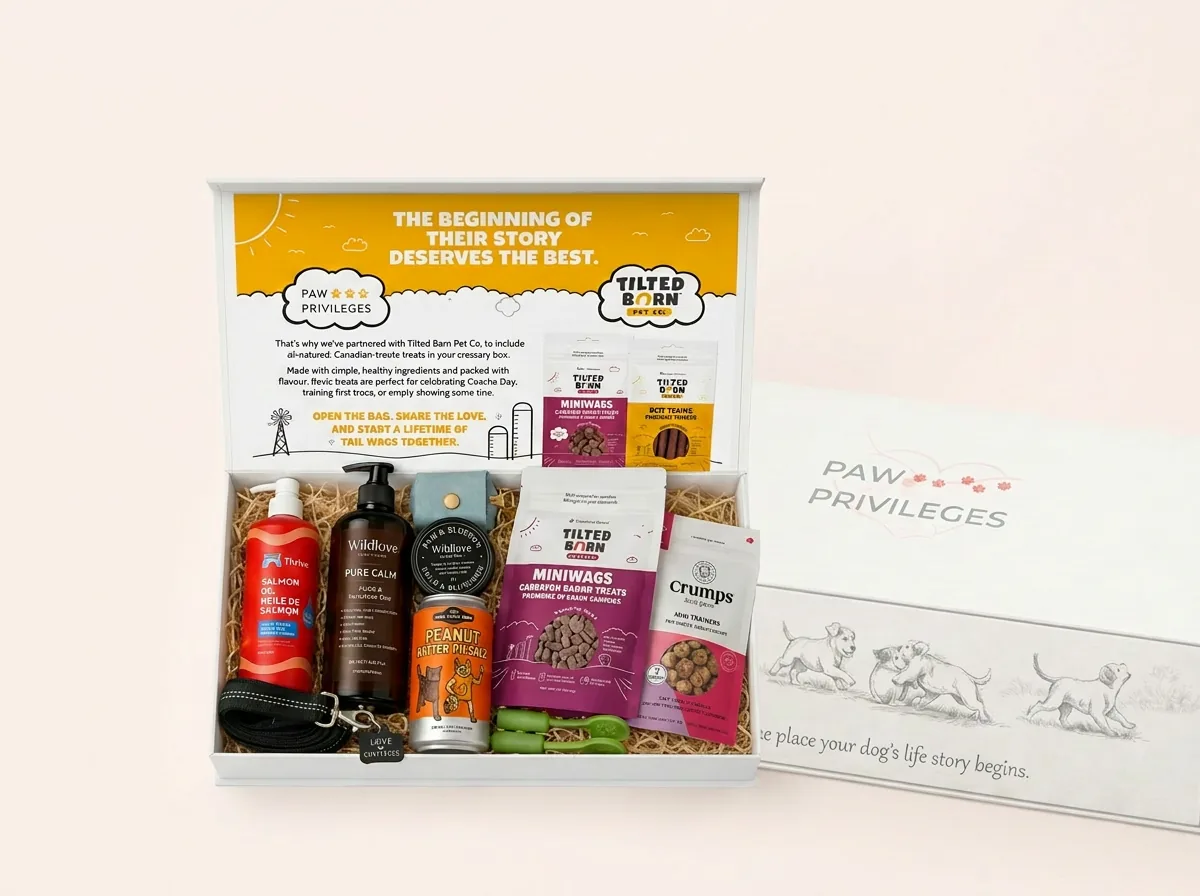
For a family bringing a puppy home, Gotcha Day is not a marketing moment. It is the beginning of a relationship. There are names to choose, routines to learn and a small dog suddenly at the centre of everything.
For a Canadian pet business, being genuinely useful at that beginning can be a meaningful introduction. A thoughtful puppy-pack coupon gives a new owner a practical reason to discover your shop, book a service or try an appropriate product. The opportunity is not simply to be seen. It is to become a business they are glad they found.
Here is the case for reaching new dog owners early, grounded in Canadian pet-industry statistics and a realistic view of what builds loyalty.
Canadian pet-industry statistics: a substantial market, not a guaranteed audience
- 7.2 million dogs: the Canadian Animal Health Institute's 2024 Canadian Pet Population Survey, conducted by Léger, estimated 7.2 million dogs and 8.2 million cats in Canada. Pets lived in more than half of Canadian households. Source: CAHI, published March 11, 2025.
- C$6.1 billion in pet-food retail sales: Agriculture and Agri-Food Canada's latest sector report puts Canadian pet-food retail sales at C$6.1 billion in 2025. Dog food represented 66.0% of that market. This is pet food, not the value of the entire pet industry or a measure of spending through Paw Rewards. Source: AAFC, Pet food trends in Canada.
These figures describe different measures and reference years. Population estimates also vary between research providers; they should not be combined into a growth claim. What they do establish is that Canadian businesses serve a substantial population of pets and families making ongoing care and purchasing decisions.
National scale does not tell a groomer how many customers live near the salon. Nor does it tell a product brand how many people will redeem an offer. Location, relevance, availability and the experience after that first introduction still matter.
Why Gotcha Day is a valuable time to make an introduction
A new puppy brings a series of decisions: where to find a trainer, which store can explain the equipment, how to introduce grooming and which businesses understand life with a young dog. Some families already have favourites. Others are building their local support network for the first time.
A useful offer in a puppy pack meets that practical need. Instead of asking an owner to remember an advertisement while scrolling, it gives them something connected to the dog arriving home: a clear next step, from a business ready to help.
That is the value of a well-designed welcome. It does not need to be the deepest discount. It needs to feel relevant, easy to use and worth keeping.
How business-provided coupons fit the Paw Rewards puppy-pack experience
Paw Privileges' Memory Box and puppy-pack experience celebrates the beginning of life together. Business Advantage includes one business-supplied coupon in the Memory Box, alongside its business-profile and public app-offer benefits.
The coupon is an introduction to your business. Owners use it through your website or retail location according to your offer's terms. It is distinct from redeeming Treats for products through Paw Rewards. Your coupon should say exactly what is offered, where it can be used and what conditions apply.
Think of the physical introduction and your online profile as two parts of the same experience. The coupon creates a reason to look. Your profile supplies the photographs, services, story and links that help the owner decide what to do next.
From a first visit to a familiar favourite
A coupon can encourage a first transaction. Loyalty requires more: an appropriate product, helpful advice, reliable service and an experience the family wants to repeat.
Research by Phillippa Lally and colleagues examined people repeating everyday eating, drinking or activity behaviours in a consistent setting. Repetition was associated with increasing automaticity, with substantial variation between individuals. It was not a study of pet-brand loyalty or puppy-pack coupons. Read the original habit-formation study.
Our business interpretation is straightforward: a welcome offer can open the door, while consistent value gives people reasons to return. There is no honest basis for promising that one coupon creates a lifetime customer or that a fixed number of days guarantees a purchasing habit.
For a trainer, the next step might be a clear path from an introductory conversation to suitable classes. For a groomer, it might be a considerate introduction followed by a schedule appropriate for that dog. For a retailer, it might be remembering the customer's needs and making the next visit just as useful as the first.
What makes a puppy-pack coupon worth using?
Start with the owner, not the discount percentage. What would genuinely make those first weeks easier?
- One clear benefit. Explain the actual saving or service without making the owner interpret a complicated promotion.
- A relevant destination. Send a scan or click to the correct offer, product or booking page, not a homepage that makes them hunt.
- Practical terms. State the expiry date, eligible products or services, minimum spend, geographic limits and any exclusions.
- Enough time to use it. Give families room to settle in and choose an appropriate appointment or purchase.
- A recognisable business. Keep your logo, photographs, contact information and profile consistent with the coupon.
- A manageable promise. Choose an offer your business can fulfil well, including at busy times.
Illustrative ideas include a welcome saving on suitable puppy essentials, a clearly defined introductory training service or an offer connected to a puppy's first grooming visit. These are examples for businesses to consider, not claims that any particular offer is currently available. Suitability and care should always come before making a sale.
Measure the relationship, not just the reach
Give the puppy-pack coupon its own code or destination so you can distinguish it from other promotions. Then review what happened in your own booking or sales records.
- Distribution: how many coupons were actually placed in packs, when that count is available.
- Response: visits to the dedicated offer page and genuine enquiries.
- Redemption: completed bookings or purchases using the coupon.
- Return: whether those customers came back within a relevant follow-up period.
- Value: revenue and margin after the offer and fulfilment costs, not revenue alone.
A scan is not a sale, and a sale is not yet loyalty. Treat these as separate steps. Obtain permission for ongoing marketing rather than assuming that using a coupon means the owner wants every future message.
Be there when their story begins
Canada's pet market is substantial. The more personal opportunity is one family, one dog and one well-timed introduction.
For businesses that bring genuine care to their work, Gotcha Day offers a chance to begin a relationship before the first routine has settled into place. A useful puppy-pack coupon, a strong profile and a good experience can work together to make that introduction count.
Give new dog owners a reason to discover you, then a reason to come back. Explore Paw Rewards Business Advantage and its annual membership benefits.
Sources and programme details checked November 18, 2026. Statistics retain their original reference years. The loyalty discussion is a business interpretation, not a measured Paw Rewards campaign result or a guarantee of customers, sales or repeat purchases.
More resources for pet businesses
Comments (0)
Loading comments…