
July 28, 2024 · Angelique
The Importance of Socialization and Puppy Playdates
Puppy socialization is more than greetings. Learn how to plan safe playdates and recognize when your puppy needs space.
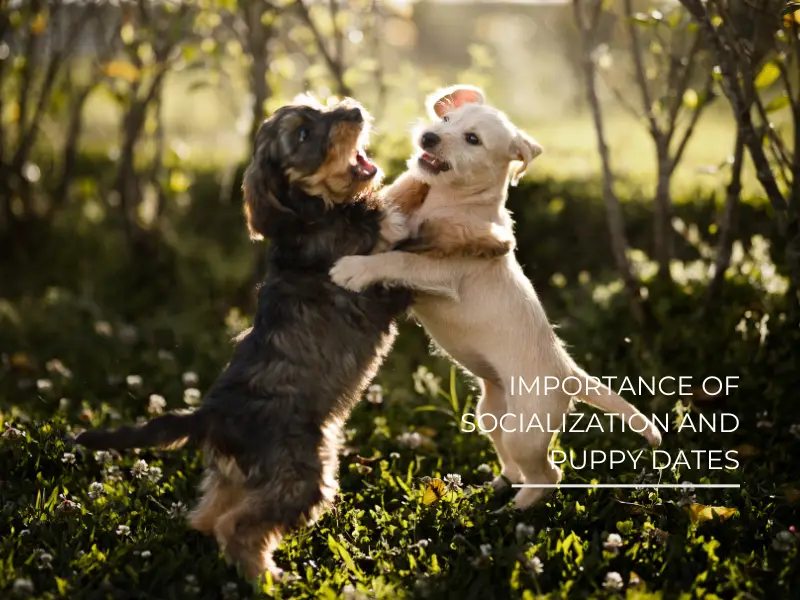
Socialization is not a contest to see how many dogs your puppy can meet. It means helping a young dog form positive, manageable associations with the ordinary people, sounds, surfaces, handling and environments they will encounter throughout life. A good puppy playdate can be one small part of that work, but it is never a substitute for thoughtful everyday exposure.
This guide focuses on planning and supervising appropriate puppy playdates. For exposure before your puppy has completed vaccinations, see safe puppy socialization before vaccinations. For choosing a supervised class, see what to look for in a puppy class.
What makes a puppy playdate worthwhile?
The best playdate gives puppies an opportunity to explore and interact voluntarily in a suitable setting, with attentive adults ready to pause the session. A puppy who watches from a comfortable distance can still have a useful experience. Friendly interaction is not measured by how much running, wrestling or noise happens.
Individual puppies differ in confidence, sensitivity, stamina and preferred style of interaction. A shy puppy should not be pushed into a group simply because another puppy is outgoing. Socialization supports learning; it does not guarantee any particular adult temperament.
Before arranging a playdate: five checks
- Health planning: Ask your veterinarian what kinds of interactions and locations are appropriate based on your puppy's vaccination history and the infectious-disease risks in your area. Do not assume that an unfamiliar dog's health status is known.
- Suitable partner: Choose a known, socially appropriate dog or puppy whose owner can calmly manage interactions. Consider size, play style and the experience of each dog, not age alone.
- Low-risk location: Prefer a quiet, secure and clean environment without uncontrolled access by unfamiliar dogs. A busy public dog park is not a recommended first playdate venue.
- Escape and rest space: Each puppy needs room to step away, access water and take breaks without being pursued.
- Adult supervision: Agree in advance that either owner can end the session immediately without embarrassment.
How to introduce puppies without overwhelming them
Start with plenty of space and allow the dogs to observe one another. Follow their body language: soft movement, brief approaches and the ability to pause or disengage are encouraging. Gradually allow more interaction only if both animals remain comfortable. If one puppy repeatedly retreats, hides behind a person or becomes tense, create distance rather than insisting on a greeting.
Keep the first interaction short. End while the experience is still positive. A successful playdate may include a few seconds of mutual sniffing, a gentle game or simply walking separately in the same safe environment. The goal is a positive memory, not exhausting the puppy.
What healthy play looks like—and when to pause
Play can include bouncing, chasing and gentle mouthing. Look for a loose body, changes in roles, natural pauses and both dogs willingly returning to the interaction. A wagging tail by itself does not prove comfort.
Pause if you notice persistent one-sided chasing, repeated pinning, difficulty escaping, freezing, yelping, sustained avoidance or escalating arousal. Calmly separate and give both dogs a chance to settle. Do not punish a puppy for communicating discomfort or growling; that information is important. If interactions repeatedly become frightening or unsafe, seek help from a qualified, humane trainer or veterinary behaviour professional.
Alternatives to playdates for puppies who prefer space
- Watch ordinary outdoor activity from a distance where the puppy remains relaxed.
- Explore a new safe surface or household object at the puppy's own pace.
- Take a short, quiet outing with opportunities to observe rather than greet.
- Practise gentle handling paired with rewards and stop when the puppy wants a break.
- Use a well-managed puppy class that protects rest and choice, rather than forcing group play.
These experiences can support confidence without contact with unfamiliar dogs. Ask your veterinary team to help balance exposure with local disease risk.
Common playdate mistakes
- Using a dog park as a socialization test: unfamiliar dogs, uneven play styles and unmonitored interactions can overwhelm a puppy.
- Letting older or larger dogs 'teach a lesson': the puppy needs thoughtful management, not intimidation.
- Assuming every puppy must love all dogs: neutral, relaxed behaviour around others is a worthwhile outcome.
- Ignoring tiredness: repeated biting or frantic running may signal a need to rest or reduce stimulation.
- Forcing greetings: allow each puppy the option to move away.
How a responsible breeder helps before pickup
Early raising includes more than a particular branded protocol. Ask the breeder what introductions and experiences the puppy has already had, how they respond to unfamiliar situations and which signs suggest they need a break. Continue appropriate positive experiences after go-home day while protecting sleep and predictable routines. Read temperament testing and early puppy raising for a more detailed discussion.
Supporting a puppy's routine with Paw Rewards
Paw Rewards is 100% free with no premium tier. Its training pathway includes eight-week puppy foundations through advanced K9 Working and elite levels, personalized for breed, age, activity and lifestyle. A brief training record may help you notice how your puppy responds to new environments, but the app cannot assess safety or replace a veterinarian or qualified trainer. You must have an active free app account to earn or redeem eligible Treats; special bonuses depend on the rules of the current Paw Quest.
Frequently asked questions
Does my puppy need to meet lots of dogs?
No. Prioritize calm, positive experiences and appropriate partners over a large number of greetings.
Should my puppy go to the dog park for socialization?
Uncontrolled dog parks are generally a poor choice for early puppy introductions. Ask your veterinarian about safe settings and look for well-managed alternatives.
What if my puppy hides during a playdate?
Give them space and end or simplify the interaction. Forcing contact is unlikely to help a frightened puppy feel secure.
Do playdates replace puppy classes?
No. A well-run class can help people learn management and training skills while coordinating carefully supervised opportunities for puppies.
Further guidance: The American Veterinary Society of Animal Behavior position statements address early socialization and humane training. Your veterinarian is the appropriate source for your puppy's vaccination plan and local disease considerations.
Your puppy journey
Keep building a calm, confident start.
Paw Rewards is free; an active Paw Rewards app account is required to earn and redeem Treats. No breeder invitation is required.
Comments (0)
Loading comments…